
ACCENT HOME IMPROVEMENTS
Project phases. Make each stage a complete decision.
Plan the work you want now without losing the next stage. Record retained materials, shared interfaces and the questions that need assessment before separating one exterior project into several offers.
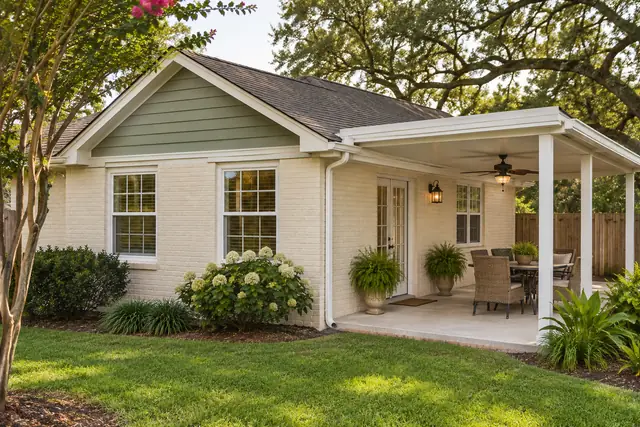
Describe the finished aim before dividing the work.
Start with the exterior you want to work toward and identify the immediate reason for the enquiry. You may be considering siding now and windows later, or a patio cover before a wider rear-wall update. Put the eventual aim and the first requested phase on the same page. This does not require committing to future work or treating every wish as part of the current offer. It gives the assessment a reason to ask how retained items and future possibilities relate. Label later ideas as undecided where that is the truth. A phased brief becomes useful when each stage has a defined purpose, while the household still has a reference for the connections between stages. Avoid dividing the project solely by product names before the existing conditions have been discussed.
Make a retained-and-changed map for each stage.
Use one wide photograph or simple elevation sketch and mark the areas you want considered now. Label the windows, doors, wall finishes, roof edges, gutters and covers that remain. Use a different mark for later possibilities. Keep these categories visible when options are compared, especially where new work meets an older retained item. The record should say “window W2 retained in this enquiry” rather than merely omitting the window from a siding list. An omission can be misunderstood; an explicit retained label becomes a clear question about the interface. Do not draw an unassessed construction detail to fill the gap. Ask which connections need review and whether the proposed first phase can be described completely with the later work still undecided.
Ask about dependencies before choosing the order.
Identify places where one proposed scope could affect another: an opening within a wall area, a cover beside siding, or a gutter along a roof edge. Bring these as assessment questions rather than assuming a universal order of trades. A property may have existing alterations or retained components that are not apparent in an inspiration photograph. Ask what information is needed to discuss the sequence and which later choices would materially change the current offer. The siding and window opening schedule can keep opening labels consistent across those conversations. If a dependency remains unresolved, record the question and who will clarify it. A useful phase order follows the assessed project and its interfaces instead of a generic promise that one product must always come before another.
Define a sensible stopping point for the first offer.
Ask what completed work is being offered in the first phase and what remains outside it. Describe the visual boundary, retained items and any closeout or care information relevant to that offered scope. Avoid treating a temporary idea or an unfinished edge as an agreed stopping point without a clear assessment and written description. If completing the first stage depends on another decision, surface that dependency before comparing prices. You can decide to reduce, combine or defer a requested phase after learning more about the conditions. The goal is a first offer that can be understood on its own, with its exclusions visible, rather than a partial wish list whose missing pieces are assumed to belong to a future contractor or a later household budget.
Keep selections consistent without assuming future availability.
Record the exact proposed finish or product information for the phase under review, along with retained colors and materials it needs to relate to. If a later phase is expected to match, flag that preference as a question. Do not assume that a sample, product or color will remain available indefinitely or that a later installation will look identical to an earlier one. Keep the supplier information or product document with the date it was considered. Ask which selections need to be decided now for the current scope and which can remain open. An appearance plan can help explain intent, while the current written offer should still describe only the work and products actually being proposed for that stage.
Keep household timing separate from construction promises.
List the dates and activities the household needs considered, such as travel, work from home, access to a side yard or an event planned at the house. Mark these as requested constraints rather than confirmed work dates. Ask what sequence and scheduling information can be provided for the offered first phase and what remains dependent on selections or assessment. Keep later phases out of a promised calendar unless they have actually been agreed. When a date changes, identify the affected stage and update the same record so a previous note does not circulate as a current commitment. This approach gives the household a practical planning reference without inventing a standard lead time or a completion interval for unassessed work.
Windows →
Compare phases using complete scope descriptions.
If you request a combined option and a staged option, use the same property labels and overall aims in both enquiries. Compare what each offer includes at the interfaces, what is retained and what needs another decision. A lower first-stage price is only part of the comparison when the boundaries differ. Keep exclusions and related work beside the relevant phase rather than in a separate unexplained list. For every offered stage, ask for a written description of the work, material selections, scheduling information and price. Keep each clarification beside the stage it concerns so alternatives can be compared from the same facts. Ask Accent to clarify differences in the actual proposals instead of treating two differently bounded offers as directly equivalent.
Save the handoff that the next conversation needs.
At the end of a stage, keep the agreed scope, product information, relevant photographs and any care or closeout documents provided. Update the retained-and-changed map to reflect what was actually done rather than the original wish list. Name any later decisions still open, and preserve the earlier record so the history remains understandable. A future enquiry can then begin with the current condition and documented first phase. Start the Accent conversation by naming the immediate service of interest and explaining the later work being considered in the notes. The assessment can address the present offer while identifying questions at its boundaries. A good phased brief makes the next decision easier without pretending that future work has already been designed, priced or scheduled.
GOOD QUESTIONS. CLEAR ANSWERS.
Your project phases questions.
Use these answers alongside the assessed conditions and choices for your own property.
YOUR PROJECT · YOUR NEXT STEP
Turn your project ideas into a clear next step.
Share your project and city or ZIP. Accent can discuss the existing space, your priorities and the details needed for an estimate.
- Share your project
A short request. Phone or email. No account needed.
- Review scope and estimate
Discuss the assessed work, materials, preparation and exclusions.
- Approve and plan the work
Confirm the agreed scope and installation arrangements with Accent.
Your request starts a conversation. You approve the work before installation.
