
ACCENT · NEW ORLEANS AREA
Gutter protection
Discuss leaf protection with the existing gutters, roof debris and service access in view. Start with an assessment of the complete runoff arrangement.
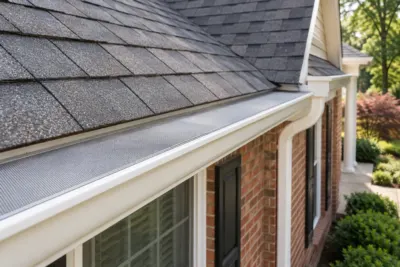
Original Accent gutter project photography, used to show roofline and finish context.
Protection that fits the whole gutter system.
Make gutter protection part of a drainage plan that fits your home. Accent Home Improvements includes leaf-protection options within its New Orleans-area gutter services. Before choosing a guard, look at the gutters you already have, the debris that reaches them and the places where water goes after leaving the roof. A cover over the gutter is one component of that arrangement. If you have recurring overflow, loose sections or a troublesome downspout, explain those concerns when requesting an assessment so the proposed work addresses the existing system as well as the new protection.
1 · PROJECT DETAILS
Start with the problem you want to reduce
Different homes collect different debris. Leaves, small twigs and material from nearby vegetation do not behave identically, and their amount can change with the season. Tell the assessor what you have observed and which roof edges need the most attention. Photographs of nearby trees and the affected elevations provide useful context. You do not need to climb onto the roof or open a gutter to make a practical first request.
Be specific about the desired result. You may want to reduce debris entering the gutter, make routine care more manageable or replace an existing protection product that has become difficult to service. Those goals are more useful than asking for a system described only as maintenance-free. Ask which protection options are offered and what care they still require. A good selection conversation includes how the component works with your existing gutters and how it can be inspected later.
2 · PROJECT DETAILS
Check the gutter system before covering it

A detail from Accent’s photo collection. Discuss what fits your own home.
An existing gutter needs assessment before a protection system is added. Describe any sagging, visible gaps, loose sections, overflow or recurring stains. Those observations can have different causes. The review should distinguish a debris problem from conditions involving the gutter arrangement, attachment or discharge route. Installing a guard should not be treated as proof that every pre-existing problem has been corrected.
Ask which preparation is included. Cleaning, repair, adjustments, replacement sections or new downspouts may be separate parts of the scope. Have them identified in writing, along with the areas that will remain unchanged. If new gutters are also needed, discuss the complete system rather than selecting the guard first. The proposal should explain whether the protection is being installed on retained gutters or supplied as part of a new installation and which components each responsibility covers.
3 · PROJECT DETAILS
Follow water from the roof to the discharge point
A gutter system carries water along the roof edge and into downspouts, but the discussion should not stop at the opening of a downspout. Tell Accent where water currently goes and where you see repeated pooling or staining. A guard does not automatically change the discharge point or solve a yard drainage concern. Make those observations part of the assessment so the limits of the gutter work are clear.
Ask whether the project includes downspout changes, extensions or coordination with another drainage scope. Do not assume below-ground work is included in a gutter proposal. If siding, fascia or roofing work is also planned, share that information before selecting the installation sequence. Related work may involve the same edge of the building. A coordinated plan can keep the guard, gutter and finished roofline from being treated as disconnected purchases.
See the details in real homes.
Explore photographs from Accent’s original project collection. Open a photo for a closer view, then bring the details you like to your own project discussion.


Bring the details together.
Tell Accent what you want to change, where the home is and which connected improvements you are considering. A clear request makes the next conversation useful.
4 · PROJECT DETAILS
Understand the offered product and its care requirements
Ask for the name or description of the proposed protection system, the installation method and the surfaces it connects to. Review the product information provided with the proposal rather than assume every guard has the same construction. Discuss how the selected system can be accessed for cleaning or service. A homeowner should understand what can be inspected from the ground and when professional access may be needed.
Keep the actual product warranty and workmanship terms with the project paperwork. Confirm which conditions and components they cover rather than relying on a broad claim about never cleaning gutters again. Ask how a future roof, fascia or gutter project could affect the installed protection. Being able to remove, service or coordinate a component later is part of its practical value. The right choice should match your maintenance expectations as well as the current appearance of the roofline.
5 · PROJECT DETAILS
Compare the same roof edges and supporting work
A detail from Accent’s photo collection. Discuss what fits your own home.
List the elevations included, the retained gutter sections, any replacement work and the selected protection. Check that each proposal describes the same boundaries. A front-only installation and protection around the entire home are different projects, even if the product names match. Access to upper levels, side yards, landscaping and existing patio covers may also influence how the work is planned.
Have preparation, removal of an old guard, disposal and cleanup stated separately where applicable. If additional gutter or fascia conditions are discovered, agree on how they will be documented and approved. A clear proposal helps you understand what you are buying without reducing the decision to a price per foot that omits the supporting work. Keep optional upgrades distinct from the work needed to complete the proposed installation.
6 · PROJECT DETAILS
Request an assessment with useful details
Send the property city or ZIP code, the roof edges involved and photographs taken from a safe position on the ground. Mention the type of debris you notice, previous gutter work and any existing guard product. If the concern happens during rain, describe the location and what you see without assuming the cause. Those details help the first conversation identify whether protection, gutter work or a broader review is the appropriate next step.
Call Eastbank 504-888-4733 or Westbank 504-341-8178, or use the project request form. Ask about gutter protection as part of the complete roof runoff arrangement. Accent’s original gallery photographs can help you discuss the finished roofline and downspout appearance. Service availability is confirmed for the property and scope. Office visits are by appointment, and a request for contact does not reserve a construction date.
GOOD QUESTIONS. CLEAR ANSWERS.
Before you decide.
Explore the details below, then ask about the conditions and choices specific to your home.
Explore the connected work.
Make the next step a clear one.
Share your property location and priorities. Call Eastbank 504-888-4733 or Westbank 504-341-8178, or send your project request. Office visits are by appointment.
YOUR PROJECT · YOUR NEXT STEP
Plan gutters around your home’s roof and runoff.
Share your project and city or ZIP. Accent can discuss the existing space, your priorities and the details needed for an estimate.
- Share your project
A short request. Phone or email. No account needed.
- Review scope and estimate
Discuss the assessed work, materials, preparation and exclusions.
- Approve and plan the work
Confirm the agreed scope and installation arrangements with Accent.
Your request starts a conversation. You approve the work before installation.
