
ACCENT HOME IMPROVEMENTS
Fall questions. A focused gutter brief. Connect the leaves, corner and outlet to one location.
A useful fall gutter enquiry identifies the actual roof-edge area, nearby vegetation and the outlet location you want to discuss. It also separates what you have observed from what still needs assessment. Before contacting Accent Home Improvements about gutters in Greater New Orleans, bring the current house into view with a few clear location references. Keep the discussion focused on the offered gutter work and the questions that belong with another provider.
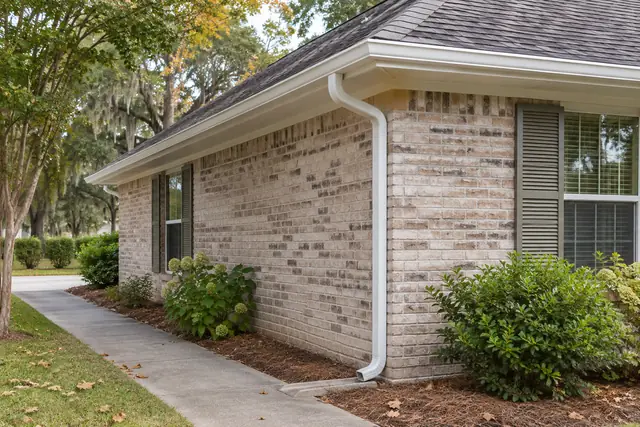
Give the gutter enquiry a specific location
Start with the building corner or roof-edge section you want to discuss and show where it sits on the house. Use an ordinary ground-level view when conditions permit, followed by a closer view only if it can be taken safely without climbing. Identify the nearby entrance, patio or wall so the location remains recognizable in later correspondence. If several corners are involved, label them separately. A broad request to fix all the water may hide different questions about roof-edge collection, an outlet and other property features. The location record helps the provider understand the requested service without assuming that all those features belong to one gutter scope.
Describe nearby leaves without diagnosing the system
Fall planning may draw attention to leaves on the property or vegetation near a roof edge. Record that context in plain terms and identify where you saw it. Do not assume from a ground photograph that a gutter is blocked, that a particular accessory is suitable or that vegetation explains every visible concern. Those are questions for the appropriate assessment. If a recent service record describes work at that location, keep it with the current enquiry and preserve its actual wording. A useful file distinguishes the surrounding conditions, your observations and what a provider has confirmed. It does not turn a seasonal association into a technical diagnosis.
Connect the roof edge to the named outlet
Show the relationship between the gutter area and the downspout or outlet you want to discuss. Keep the references consistent across wider and detail photographs. Describe what you can see from an ordinary safe position, leaving concealed routes or connections marked as unknown. Ask which portions of the requested work fit the offered gutter service and whether other property questions need a separate provider. An exterior gutter discussion does not automatically include underground drainage, grading or every surface-water concern. Clear boundaries make it easier to understand the actual offer and avoid describing a visible outlet as proof of how the entire property handles water.
Bring previous gutter work into the record
Collect earlier service notes, product identification and any written description of work at the affected location. Keep the provider name and date visible. If a record refers to a different corner, do not attach its conclusions to the present concern without explaining the difference. Where the history is incomplete, say so. A current enquiry can still be useful when the older information is limited. Ask what assessment is needed for the actual property rather than assuming a previous cleaning, replacement or adjustment establishes the present condition. Keep care information and warranty terms attached to the exact products or work they concern.
Use a separate log for a rain observation
If your question involves what you noticed during or after rain, retain the honest observation date and the specific location. Keep that event record separate from the fall service enquiry and reference it when useful. The runoff-observation guide provides a place for the detailed sequence, while this brief identifies the work you want to discuss. Do not remain outside in hazardous weather or create a new exposure to obtain a better view. Photos can wait for appropriate conditions. A single image or remembered event should remain an observation, not a confirmed explanation of cause, capacity or the full repair needed.
Ask about the actual offered option
When a gutter option is discussed, ask how its proposed locations, selections and exclusions relate to your enquiry. If accessories or changes to outlets are suggested, keep the exact proposed details and any unresolved questions together. Do not assume that a general product category eliminates maintenance or resolves every runoff concern. Compare actual offered work rather than broad promises made for a different property. If a question concerns sizing or configuration, ask for an explanation tied to the assessed house and keep that response with the offer. This guide prepares the conversation; it does not supply a universal gutter dimension or installation instruction.
Keep timing and access questions attached to the scope
Tell the contact about ordinary access arrangements and any nearby areas that need discussion, such as a frequently used entrance or patio furniture. These notes explain the household’s preferences; they do not replace confirmed work preparation instructions. Ask what information must be resolved before an actual schedule can be discussed. If you want the enquiry considered during fall, identify that as a preference rather than a promised completion date. Keep updates in the same current file, especially when an affected outlet or building area changes. The provider should be able to connect the practical question to the specific work being offered.
Send Accent a concise gutter enquiry
Prepare the property location, labeled roof-edge and outlet views, a short description of the concern and relevant earlier records. State whether the enquiry is about a proposed gutter project, questions about an existing feature or an observation that still needs assessment. Ask Accent which parts fit its gutter service and what information is needed next. Keep separate drainage, structural or other specialist matters with the appropriate provider unless an actual offer expressly includes relevant work. As the discussion develops, retain the current scope and choices together so the seasonal concern becomes an understandable project conversation rather than an unexplained request to address the whole property.
GOOD QUESTIONS. CLEAR ANSWERS.
Your fall gutter planning questions.
Use these answers alongside the assessed conditions and choices for your own property.
YOUR PROJECT · YOUR NEXT STEP
Plan gutters around your home’s roof and runoff.
Share your project and city or ZIP. Accent can discuss the existing space, your priorities and the details needed for an estimate.
- Share your project
A short request. Phone or email. No account needed.
- Review scope and estimate
Discuss the assessed work, materials, preparation and exclusions.
- Approve and plan the work
Confirm the agreed scope and installation arrangements with Accent.
Your request starts a conversation. You approve the work before installation.
