
ACCENT HOME IMPROVEMENTS
Weather changes. Keep the brief clear. Plan the conversation around what is actually known.
Rain can change the timing of an exterior discussion and reveal questions that were not obvious in an earlier photograph. Keep a rainy-weather enquiry practical: identify the area, explain what you observed and distinguish a preferred date from confirmed arrangements. This guide helps Greater New Orleans owners discuss exterior work with Accent Home Improvements while keeping weather safety, observation records and the actual offered scope in their proper places.
Keep safety separate from the documentation task
The National Weather Service advises taking shelter indoors when thunder is heard; a porch is not a safe thunderstorm shelter. Follow current official weather guidance and local instructions. Do not stay outside, move to a porch or approach windows to record a concern during lightning. Missing photographs can remain missing. This page concerns organizing an enquiry and discussing appropriate next steps, not observing hazardous weather from a better angle. Use existing records and add ordinary views later when conditions permit. Neither a contractor message nor a planning article establishes that a particular area is safe to approach or that an exterior assessment should proceed.
Explain the project area before describing the weather
Name the affected wall, entrance, patio or gutter location and connect it to a wider property view already available. A message that only says the rain is a problem leaves the requested work unclear. State whether you want to discuss a new exterior feature, an existing visible concern or timing for a project already being considered. Keep those conversations distinct. If the enquiry involves a patio cover and a nearby gutter, identify the relationship without assuming both items belong to one offered scope. The provider needs the actual location and requested service before it can clarify what information or assessment would be useful.
Distinguish a dated observation from an explanation
Record what you noticed and when you noticed it, using plain language rather than a cause claim. Explain whether a photograph was taken after conditions changed or whether it shows an earlier ordinary view. If a detailed event sequence matters, use the runoff-observation record and reference it from the enquiry. Do not recreate an event from memory as though every detail were measured or photographed. Timing alone does not prove the source or extent of a concern. Keep prior work records and any actual assessments with their named sources so the provider can see the difference between an observation, a recollection and a professional conclusion.
Ask what conditions matter to the next step
An initial enquiry, a property assessment and actual installation are different activities. Ask the provider which next step is appropriate for the work being discussed and how weather-related changes should be communicated. Do not invent a universal dry period, temperature threshold or readiness test for every exterior product. Relevant requirements depend on the actual service, materials and assessed conditions. Keep the provider’s confirmed instructions with the current scope and contact details. If conditions change, send a factual update rather than assuming an earlier arrangement still applies. A clear message can explain what changed while leaving the decision about the actual work with the appropriate parties.
Keep household availability distinct from a work date
Tell the contact when you are ordinarily available and whether an entrance or outdoor area needs particular discussion. Record those details as household preferences until arrangements are confirmed. A break in the forecast or a preferred day does not establish that the property, materials and provider are ready for the offered work. Ask how actual scheduling updates will be handled once the relevant scope and selections are clear. Keep the current contact thread easy to find. If you need to change availability, identify the property and project reference so the update is connected to the correct enquiry rather than an unrelated earlier conversation.
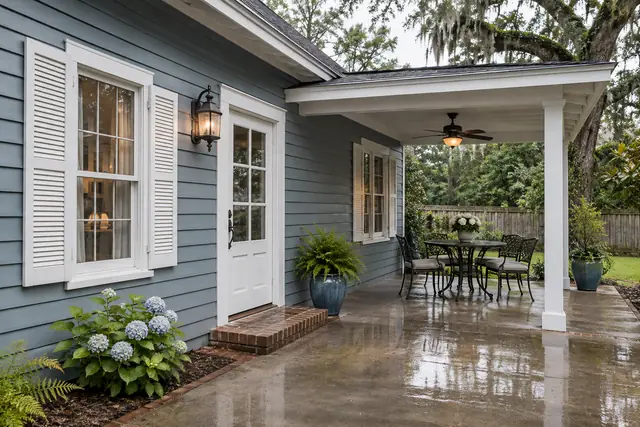
Separate design choices from a weather observation
A wet patio photograph may prompt interest in a cover or a different outdoor arrangement. Describe that as a design goal, separate from any question about the existing water route or building condition. Ask which features and product information are relevant to the actual proposed work. Do not assume that a cover makes every area dry, resolves a drainage concern or permits safe use during hazardous weather. Nearby doors, walls and gutter locations should remain visible in the brief. If a question belongs to another provider, keep it identified rather than using a single attractive design idea as the answer to every rain-related issue.
Gutters →
Update the file without erasing uncertainty
When a later ordinary photograph becomes available, retain the earlier material with its date and add the new view as a separate record. Note whether a location reference or project question changed. Keep original files unchanged and mark only copies. If a provider supplies an assessment or revised offer, preserve the actual document and identify which version is current. Do not rewrite the earlier observation to make it fit the latest idea. An enquiry can contain unanswered questions and incomplete views while still being useful. Honest gaps help the appropriate person determine what remains to be assessed before the project conversation moves forward.
Bring Accent a focused weather-related enquiry
Send the property location, requested exterior service and a concise account of the question you want to resolve. Add existing photographs and relevant prior records without creating a new exposure to obtain them. Ask whether the work fits Accent’s services and what information or assessment is needed next. If you already have an offered scope, use its reference when asking about timing or changed conditions. Keep emergency guidance, insurer interpretation and unrelated drainage or specialist matters with the appropriate sources. The result should be a clear next conversation, supported by dates and locations that distinguish what is known from what still needs a response.
GOOD QUESTIONS. CLEAR ANSWERS.
Your rainy-weather planning questions.
Use these answers alongside the assessed conditions and choices for your own property.
YOUR PROJECT · YOUR NEXT STEP
Turn your project ideas into a clear next step.
Share your project and city or ZIP. Accent can discuss the existing space, your priorities and the details needed for an estimate.
- Share your project
A short request. Phone or email. No account needed.
- Review scope and estimate
Discuss the assessed work, materials, preparation and exclusions.
- Approve and plan the work
Confirm the agreed scope and installation arrangements with Accent.
Your request starts a conversation. You approve the work before installation.
