
ACCENT HOME IMPROVEMENTS
Know the basis. Ask what the gutter recommendation is sized to handle.
Which roof areas feed each gutter run? Which outlets are proposed? Bring those questions to Accent, then ask what supports the size recommendation for your home. Use the record below to keep the explanation, assumptions and remaining assessment questions together.
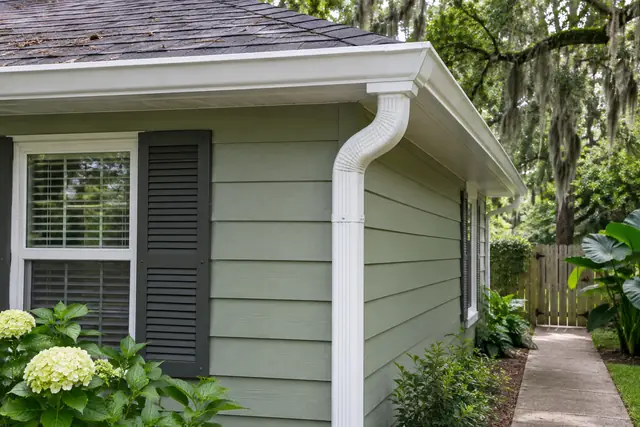
Start with the roof areas feeding each run
Ask which roof sections the proposed gutter is intended to serve. A simple description such as the front porch edge or the long driveway-side roofline is a useful starting point, provided the assessor can identify the same location. Where several roof sections meet, ask how their relationship has been considered. Do not invent dimensions from a photograph or turn a homeowner sketch into a drainage calculation. Keep known information, estimates and measurements still required clearly labeled. The useful question is not merely whether one gutter looks larger than another. It is whether the recommendation belongs to the actual collection area and outlet arrangement being discussed for this house.
Give the runs and outlets consistent names
Use a whole-house view and ordinary location names to identify the proposed runs. For example, front run G1 and side outlet O1 can connect a photograph to the same location in an enquiry. Ask the provider to confirm the arrangement rather than assume that every existing downspout stays. If a porch or patio cover has its own roof edge, distinguish that part from the main house. The labels are communication aids, not installation instructions. They help prevent an answer about one short run from being applied to every elevation. Keep any location you cannot see or identify marked as unknown until it can be properly reviewed.
Ask what the size recommendation actually includes
Request the offered gutter identification and the outlet arrangement together. Ask what information supports that recommendation and which site details remain to be verified. A broad size label alone does not tell you the number of runs, outlet positions, retained sections or boundaries of the proposed work. If two options are offered, ask whether they use the same assumptions. A difference in price may also reflect a different layout or scope. Record the actual alternative and the explanation supplied for it. Avoid selecting from a universal online rule or treating a product photograph as proof that the same arrangement suits every Louisiana house.
Use existing rain observations as context
If you already have a dated account of water spilling at an edge, describe the location, approximate timing and what was visible. Keep the original photograph with its date and note when information is uncertain. An observation can help frame the assessment question without proving the cause or establishing the required capacity. Do not go outside during dangerous weather, use a ladder or enter an unsafe area to complete a record. A dry-weather visit and a past event provide different information. Ask what can reasonably be established from each and whether another assessment step is needed before a recommendation is finalized for the affected run.
Follow the discussion to the outlet boundary
Ask where the proposed work ends. A downspout shown beside a walkway, doorway or adjoining surface may raise a separate question about where water goes next. Identify any existing extension or concealed connection without assuming its condition, capacity or inclusion in the offer. If another provider must review an underground route or a broader site concern, keep that responsibility visible. The gutter selection and the rest of the property's drainage are related questions with potentially different scopes. A useful written answer identifies the outlet location being offered and any downstream issue still requiring review rather than letting the entire route disappear behind a general installation label.
Your working record fields
- Run reference
- Recognizable roof edge and collection-area location.
- Known information
- Actual records, existing observations and confirmed details.
- Offered arrangement
- Identified gutter option and proposed outlets.
- Recommendation basis
- Provider explanation and assumptions supplied.
- Unconfirmed detail
- Measurement or condition still requiring assessment.
- Scope boundary
- Retained components and downstream responsibilities.
- Next answer
- Question, responsible contact and proposal version.
Keep guards and access questions identifiable
Tell Accent whether gutter protection is being considered, already present or outside this request. Ask how the offered components relate to the assessed system and what care or access information applies to the actual product. Do not treat a guard as an automatic answer to every observed overflow or assume that a larger gutter removes every maintenance question. If the current issue concerns a protected run, preserve that detail in the enquiry. The assessment should be able to address the relevant conditions without the homeowner deciding the cause in advance. Keep any proposed guard selection, existing component and separate service question distinguishable in the record.
Compare the explanation as well as the total
Place the offered alternatives beside the same location list. Check which roof areas, runs, outlets, removals and retained components each description concerns. Ask about any difference that makes a direct comparison difficult. Where the provider uses a performance statement, ask which conditions and assumptions it describes rather than converting it into a promise about every possible storm. Save the explanation with the proposal version it supports. If the layout changes, request an updated account of the recommendation. An earlier answer about the first option should not silently become the basis for a different collection area or outlet arrangement in a later offer.
Carry the answered questions into a project brief
Once the assessment discussion has clarified the proposed arrangement, use the gutter project brief to describe the work you want considered. Keep the assessment-basis record alongside that scope request so each serves a clear purpose. Include the property location, relevant photographs already available, the run labels and the questions still awaiting an answer. Tell Accent whether the concern is an isolated location, several connected runs or part of a wider exterior project. The next useful step is a property-specific discussion of the offered work. A web guide can organize that conversation, while the responsible assessment and actual written proposal establish the recommendation and its boundaries.
GOOD QUESTIONS. CLEAR ANSWERS.
Your gutter assessment questions.
Use these answers alongside the assessed conditions and choices for your own property.
YOUR PROJECT · YOUR NEXT STEP
Plan gutters around your home’s roof and runoff.
Share your project and city or ZIP. Accent can discuss the existing space, your priorities and the details needed for an estimate.
- Share your project
A short request. Phone or email. No account needed.
- Review scope and estimate
Discuss the assessed work, materials, preparation and exclusions.
- Approve and plan the work
Confirm the agreed scope and installation arrangements with Accent.
Your request starts a conversation. You approve the work before installation.
