
FIND THE FINISH THAT FITS
Asphalt shingles. Choose the shingle and the complete scope.
An asphalt shingle choice includes its profile and color, but a useful roofing proposal also identifies the roof areas and connected components. Build a clear selection brief with Accent before treating one attractive sample or a product name as a complete replacement plan.
Separate the covering choice from the repair decision
First describe why you are considering roof work: a known concern, repeated repairs, a planned material change or a broader exterior project. Keep any existing roof records and photographs taken safely from the ground. A shingle sample helps select a covering; it does not establish whether a focused repair or replacement is the appropriate scope. Use Accent’s roof-repair page for that assessment conversation when the extent of work is still open. This guide develops the asphalt-shingle selection and system brief once those questions are being discussed. Avoid choosing the work solely from a stated roof age or assuming a visible stain identifies the point where water entered.
Discuss repair versus replacement before choosing the covering →
Compare the actual shingle family and profile
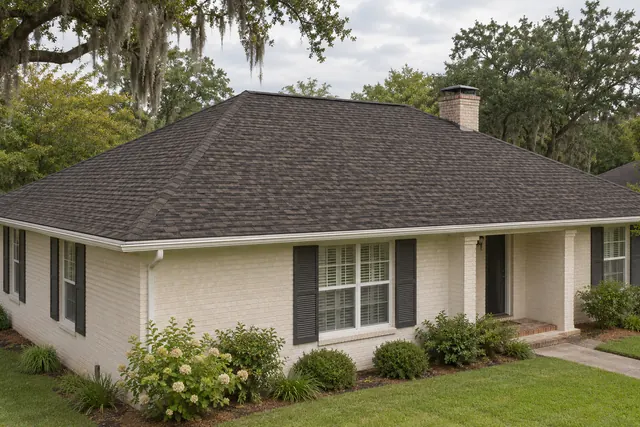
Ask for the current manufacturer, product family and sample reference for each option. Asphalt shingle choices can have different profiles and visual depth, so compare them at the same distance and under similar light. Look at the roof as a broad surface instead of judging a small sample like an interior paint chip. A pronounced pattern may read strongly across a large roof plane, while a quieter blend may support the wall colors below. Keep the approved sample and its written reference together. A finished photograph can suggest an appearance, but does not confirm that a different named product will create an identical result on your roof.
Review color with the roof shape and retained exterior
Place the proposed color references beside photographs of the siding or brick, fascia, windows and any retained roofing area. Look at more than one light condition and avoid treating a phone screen as a final color standard. If the roof has several visible planes, review the overall shape from the driveway or street and ask how the selected pattern will read across them. Include the ridge and edge appearance in that review rather than considering only the center of a sample. If property approvals apply, obtain the actual requirements before committing to a selection. A nearby house with a similar color does not establish approval for your proposal.
List the roof planes included in the proposal
Use a simple labeled photograph or sketch to identify the main roof, garage, porch, addition and any other area being considered. Ask the assessment to confirm the slope and suitability of the proposed system for each part. A low-slope attachment may need a different discussion from the steeper main roof. Do not assume every surface visible in a whole-house photograph is included under one shingle description. Keep retained and replacement areas separate on the location record and ask how their boundary will be completed. That makes a product comparison more useful because each option is being considered for the same defined roof area.
Ask for the accessories as well as the shingle name
Manufacturer roofing information presents shingles alongside components such as underlayment, starter products, ridge materials and ventilation products. Ask which actual components belong to the proposed system, without assuming a brand photograph describes your installation package. Include the treatment of edges, valleys, wall intersections and penetrations in the written discussion. Product instructions and the assessed roof govern the details; this guide does not supply a universal assembly. If existing vents, flashings or other accessories are to remain, have that stated clearly. Compare proposals using the selected components and scope, not only the label on the main shingle.
Define removal and concealed-condition decisions
Ask whether the proposed work includes removal of the existing covering and what preparation or exposed-surface assessment is included. Identify what can be confirmed beforehand and what may only become visible during the work. Agree on how an unexpected finding would be photographed, explained and priced before an additional scope is approved. Keep the person authorized to make that decision identified in the project record. Avoid treating a general allowance as proof that every concealed condition is covered. When two proposals appear different in price, compare their preparation assumptions and exclusions alongside the product selections before concluding they describe the same roof.
Coordinate edges and the occupied-home work area
Bring planned fascia, gutter or existing patio-attachment work into the roof discussion before the scope is finalized. Ask which connections are included and who handles the shared work. Separately, identify material-delivery access, parking, outdoor furniture, planted areas and the routes used by the household. Agree on how weather-related schedule changes and work-area restrictions will be communicated. These arrangements do not determine shingle performance, but they help define a practical project. Keep children and pets away from the agreed work area, and use safely taken ground-level photographs rather than climbing onto the roof to obtain a closer view for an estimate.
Retain the exact selection and the applicable terms
Your final record should identify the roof areas, manufacturer and product family, color reference, associated components, preparation scope and any approved changes. Keep manufacturer product documents separate from the written workmanship terms so the responsible party and actual conditions can be understood. Ask which care, registration or other requirements apply to the proposed product and any stated warranty; do not infer a particular term from a broad product label. When reviewing completion, compare the named areas and visible details with the agreed scope from safe locations. The parent roofing page remains the service starting point, while this record supports the specific asphalt-shingle selection.
GOOD QUESTIONS. CLEAR ANSWERS.
Your asphalt shingles planning questions.
Use these answers alongside the selections and conditions for your own property.
YOUR PROJECT · YOUR NEXT STEP
Get a clearer scope for your roofing project.
Share your project and city or ZIP. Accent can discuss the existing space, your priorities and the details needed for an estimate.
- Share your project
A short request. Phone or email. No account needed.
- Review scope and estimate
Discuss the assessed work, materials, preparation and exclusions.
- Approve and plan the work
Confirm the agreed scope and installation arrangements with Accent.
Your request starts a conversation. You approve the work before installation.
