
ACCENT HOME IMPROVEMENTS
Like the look. Name the part. Turn a reference image into a specific choice.
A photograph can contain a siding color, trim proportion, roof shape and outdoor layout that appeal for different reasons. A photo-review brief identifies the particular feature you want discussed at your own house. Use this guide when reviewing Accent project photographs or other clearly identified references. It turns an appearance preference into useful questions for Accent Home Improvements without asking a provider to reproduce an entire image or assume the same product suits a different property.
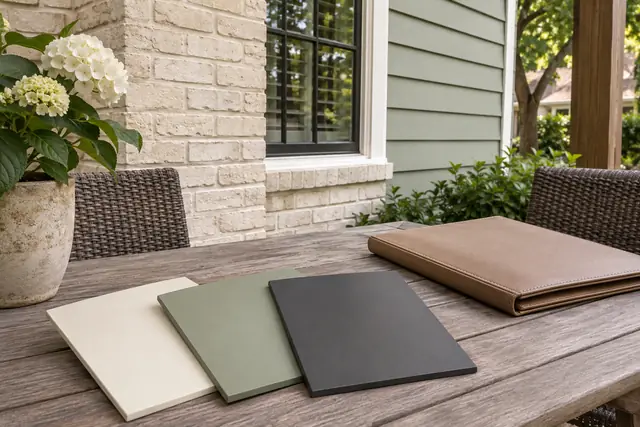
Give the reference a clear identity and purpose
Start with the source of the image and why you are reviewing it. An Accent gallery photograph, an outside inspiration image and a current photograph of your house serve different purposes. Keep those identities visible in your notes. If a gallery page supplies a project reference, retain it so the feature can be located again. Do not present an outside image or representative marketing artwork as evidence of work at your property. This review brief concerns appearance choices. The separate estimate-photography guide explains how to prepare current-condition views; the aim here is to decide what, specifically, a reference contributes to your request.
Choose one feature before describing the whole image
Name the element that caught your attention: a contrast between siding and brick, the width of visible trim, a gable accent or the relationship between a cover and an outdoor seating area. Explain it in ordinary words even if you do not know the technical product name. A statement such as I like this whole house leaves many unrelated details open to interpretation. Keep each feature on its own line so a preference for one color does not imply a request for every window, roof or patio detail shown nearby. The provider can then discuss the relevant question instead of guessing which part of the photograph matters.
Connect the feature to one location on your house
Identify the wall, opening, gable or outdoor area where you want to discuss that appearance. Keep a current wider view of your own property beside the reference so the two locations are not confused. Describe the existing materials and fixed features you hope to retain. A reference from a different building can still be useful, but its proportions, surroundings and available space may differ. The choice record should show that relationship rather than treating a cropped image as an assessed design for your home. Ask what information is needed to consider the requested feature within the actual service and property conditions.
Record the parts you do not want carried across
An image can be useful even when most of it is irrelevant to your project. State which features are outside the request or would be retained differently at your house. You might like a siding-and-trim relationship while keeping your current brick, or a patio appearance while asking about a different outdoor area. This exclusion line is important because an unqualified reference can make an enquiry seem wider than intended. Keep an optional feature separate from a selected preference. The record is not a finished scope, but it should make the household’s appearance choices understandable before they are connected to an actual offer.
Use the feature-review fields to compare references
The fields below provide a simple appearance-review entry. Repeat it for each meaningful feature rather than creating a large undifferentiated inspiration folder. Record the source image, feature liked, intended house location, retained elements and question still open. If two references show different directions, describe the difference explicitly. For example, one may appeal because of a quieter color contrast and another because of a trim proportion. You do not need to force both into one selected design. Mark alternatives honestly and ask the provider what actual product or scope information would help the household compare the relevant choices.
Your working record fields
- Reference source
- Gallery link or other accurately identified image source.
- Feature liked
- The exact color relationship, proportion or element of interest.
- House location
- Where that feature would be discussed at your property.
- Retain
- Existing finishes or features you hope to keep.
- Exclude
- Parts of the reference that are outside this request.
- Alternative status
- Preferred direction, comparison option or undecided idea.
- Provider question
- Product, suitability or scope information still needed.
Keep visual interest separate from product identification
A photograph does not reliably identify every material, product version, finish or performance characteristic. Ask about the actual proposed selection and its applicable documentation rather than assigning a brand or rating from appearance alone. Color on a screen can also be an initial preference rather than the final selection record. If samples or product information are supplied for the actual project, keep them with the feature and location they concern. Do not describe a reference image as proof that a particular product is available, suitable or guaranteed to produce the same result at a different house. The choice becomes specific through the actual project discussion.
Siding →
Turn the preferred direction into a focused enquiry
Once you have identified the useful features, reduce the first message to a small current set. Explain the property location, service interest, feature you want discussed and the relevant retained finishes. Link the source reference where appropriate and attach a clearly identified current house view. Ask Accent which parts fit its services and what assessment or product information is needed next. The appearance-review brief should support that conversation without replacing the actual proposed work. If a designer or other professional has supplied a separate requirement, retain its source and distinguish that requirement from a household preference drawn from a photograph.
Keep the final choice connected to the actual documents
As the enquiry develops, record which direction remains current, which alternatives were set aside and what is still undecided. Keep meaningful earlier references with clear status labels rather than deleting the reason for a selection change. If an actual offer uses a specific product or finish, connect it to the affected location and retain the complete document. A reference image should not silently override a different written selection. Use the project-change record when the requested feature changes after a current offer exists. The outcome is a clear appearance brief that explains the household’s intention while preserving the role of assessment, product information and the work actually offered.
GOOD QUESTIONS. CLEAR ANSWERS.
Your reference-photo review questions.
Use these answers alongside the assessed conditions and choices for your own property.
YOUR PROJECT · YOUR NEXT STEP
Turn your project ideas into a clear next step.
Share your project and city or ZIP. Accent can discuss the existing space, your priorities and the details needed for an estimate.
- Share your project
A short request. Phone or email. No account needed.
- Review scope and estimate
Discuss the assessed work, materials, preparation and exclusions.
- Approve and plan the work
Confirm the agreed scope and installation arrangements with Accent.
Your request starts a conversation. You approve the work before installation.
