
ACCENT HOME IMPROVEMENTS
A roof edge. A defined request. Give the gutter project clear boundaries.
A gutter project brief tells Accent Home Improvements which roof edges and outlet locations you want to discuss. It connects the existing house, the requested change and the features you intend to retain. Use this guide to prepare one current request for a Greater New Orleans property, then ask what assessment is needed before an actual gutter offer is developed. Keep broader drainage questions visible as separate scope questions.
Describe the work you want considered
Begin with the property address and a short sentence identifying the requested gutter work. Say whether you want to discuss selected replacement runs, a new arrangement at an identified area or several alternatives that still need assessment. Do not use a phrase such as the whole house unless you can explain which roof edges that means. List any optional areas separately. Accent’s gutter service page provides the service context; this brief organizes your request for the actual property. The provider’s eventual offer should identify what it proposes, rather than turning every item in an early conversation into an assumed inclusion.
Give each roof-edge run a stable reference
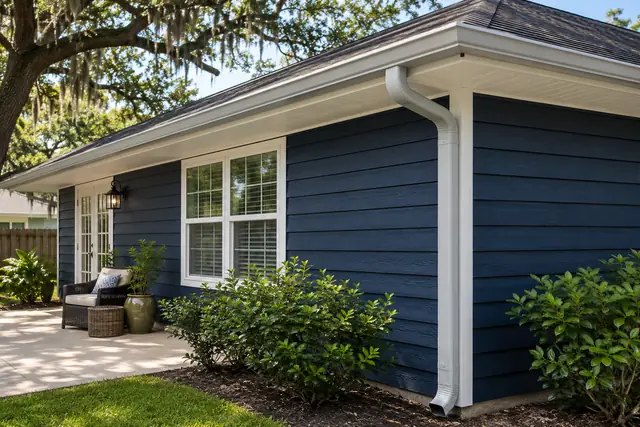
Use a simple label for each affected section, such as front entry, driveway side or rear patio wall. Pair the label with an ordinary ground-level photograph that shows where the run belongs on the building. Include a recognizable corner or nearby opening so later questions can use the same reference. If a detail cannot be seen safely, leave it as an assessment question. This guide does not require a ladder, roof access or owner measurements of an elevated feature. The useful intake record identifies the location reliably; it does not pretend that a photograph establishes the required dimensions or the condition behind the visible edge.
Separate new, retained and unresolved sections
For each labeled run, record whether your request concerns proposed new work, an existing section you hope to retain or a boundary that remains undecided. A short section list can prevent a side-wall gutter from being assumed included when the initial discussion concerned only the patio side. Mark owner preferences clearly and ask the provider to confirm the actual offered scope. If a connection between new and retained material matters, identify it as a question. Keep a whole-building photograph available for context while allowing the written offer to describe individual locations. A broad view is useful orientation, not a substitute for defined inclusions and exclusions.
Locate outlets without promising a wider drainage solution
Show the downspout or discharge location associated with each requested area where it is visible from an ordinary safe position. Note nearby doors, paths and patio space that help explain the question. Do not trace a concealed route as though you have verified it. Ask whether the requested outlet work belongs in the offered gutter scope and which other concerns require a separate provider. Underground connections, grading and wider property drainage should not be silently included in a gutter enquiry. If you have an actual rain observation, reference its dated record rather than replacing the installation brief with an unsupported explanation of the water route.
Use the brief fields to organize the request
The record fields below can be copied into a project message or your own planning notes. Complete the location and requested-work lines first, then add retained sections and unresolved questions. Leave a field unanswered when you do not know the detail. For example, front entry run may be a clear reference even when the correct configuration still needs assessment. Keep one current set of labels across photographs and correspondence. If the enquiry expands to another corner, add a new entry rather than quietly changing the meaning of an existing label. A useful brief makes missing information visible without creating the appearance of a finished technical design.
Your working record fields
- Property and contact
- Address and person returning project questions.
- Run reference
- Building side, corner or entrance that identifies this section.
- Requested work
- New or replacement work to discuss; options remain labeled.
- Retain
- Existing sections or finishes you hope to keep.
- Outlet reference
- Visible downspout or discharge location; concealed routes unknown.
- Connected question
- Fascia, cover or other interface requiring clarification.
- Current documents
- Photo references, earlier work records and brief date.
Connect appearance choices to the actual offer
If color or profile matters to the project, record the preference beside the affected location and explain which existing finishes it should relate to. Accent’s current gutter service information describes seamless aluminum gutter and downspout options, with specific selections confirmed for an actual proposal. Ask about the proposed configuration and product details for your house instead of choosing a dimension from a generic rule. Keep a preferred appearance separate from the provider’s assessed recommendation and the selection ultimately recorded in the offer. Where two options are proposed, compare the stated runs, outlets, related work and exclusions so that a visual preference does not hide a difference in scope.
Identify related roof-edge work as a question
A gutter enquiry may sit beside a question about fascia, soffit, siding or the edge of an existing patio cover. Show that relationship in the location photographs and name the issue you want discussed. Do not assume those nearby components are included simply because a gutter attaches or runs beside them. Ask which party will assess the relevant condition and how any additional work would be identified in the actual offer. If another provider is involved, keep its documents separate and make the interface an explicit question. This helps the project discussion consider connected details without inventing a repair diagnosis, a trade arrangement or an installation sequence.
Send one current gutter enquiry
Bring Accent the address, labeled roof-edge views, requested new or replacement areas and a concise list of open questions. Include relevant earlier work records if available, with their dates and sources. Ask what further information or assessment is needed before the actual offer can be described. Keep requested timing and household access preferences separate from arrangements the provider has confirmed. When a selection or location changes, use the project-change record to connect the update to the current offer. The brief should remain the understandable starting request, while the assessed scope and later agreed documents explain the work that is actually being considered.
GOOD QUESTIONS. CLEAR ANSWERS.
Your gutter project brief questions.
Use these answers alongside the assessed conditions and choices for your own property.
YOUR PROJECT · YOUR NEXT STEP
Plan gutters around your home’s roof and runoff.
Share your project and city or ZIP. Accent can discuss the existing space, your priorities and the details needed for an estimate.
- Share your project
A short request. Phone or email. No account needed.
- Review scope and estimate
Discuss the assessed work, materials, preparation and exclusions.
- Approve and plan the work
Confirm the agreed scope and installation arrangements with Accent.
Your request starts a conversation. You approve the work before installation.
