
ACCENT · NEW ORLEANS AREA
Choose with clarity.
Match window performance information and exterior shading ideas to the rooms you use. Make informed selections without relying on a promised utility-bill result.
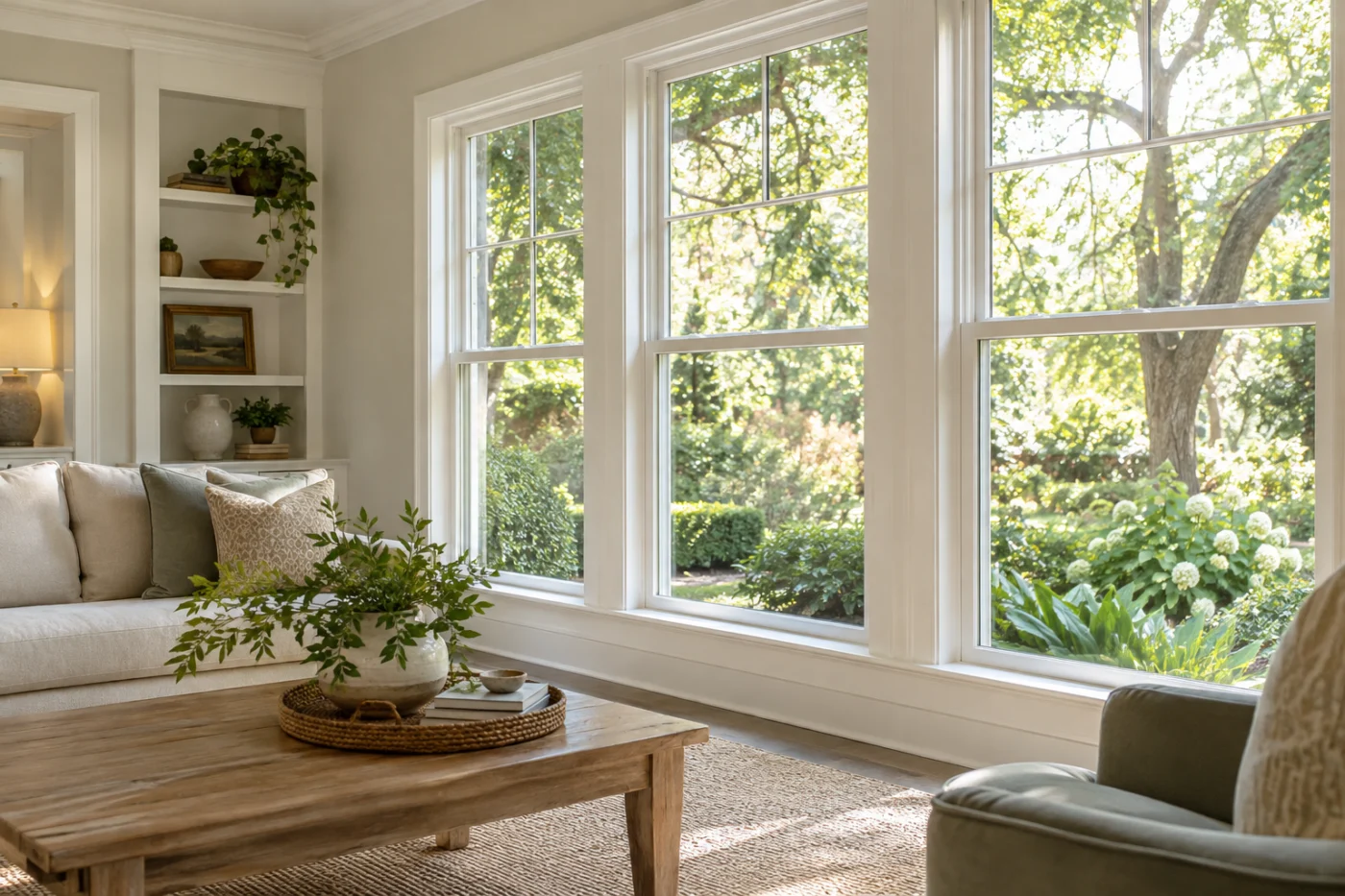
White framed residential windows overlooking a leafy garden
Start with the room, then the label.
An energy-conscious exterior project begins with a clear description of what you want to improve. A room that feels exposed to afternoon sun, a window that is difficult to operate and a desire for different glass are related observations, but they do not automatically have the same solution. Accent Home Improvements can discuss replacement windows and relevant exterior options within its established services. Bring your room-by-room priorities, the proposed openings and any connected patio or siding ideas. The useful result is a product and installation conversation grounded in your home rather than a generic savings percentage.
1 · PROJECT DETAILS
Describe comfort concerns accurately.
Identify the rooms and openings involved, the time of day you notice the concern and what you have already observed. Explain whether the issue is glare, direct sun, operation or another practical problem. These details help shape an assessment, but they are not a substitute for diagnosing separate building or mechanical conditions that may be outside a window project.
Take photographs showing the opening and the surrounding wall from safe positions. If different sides of the house behave differently, say so instead of assuming one product description answers every room. A focused enquiry makes it easier to discuss which windows are under consideration and whether other professional assessment is needed for a separate concern.
2 · PROJECT DETAILS
Use whole-product information when comparing windows.

A detail from Accent’s existing photo collection.
Window performance should be discussed using the proposed product’s documented information. ENERGY STAR identifies climate-related criteria using ratings such as U-factor and solar heat gain coefficient. The official resource below is a useful starting point for understanding those terms. A product label and the exact proposed configuration are more useful than an unsupported description such as the most efficient glass.
Ask the team to identify the window being proposed and the information relevant to that selection. Do not assume that a familiar brand name, pane count or frame material establishes every performance characteristic. Keep the product record with your proposal so that appearance, operation and documented performance can be compared as parts of the same decision.
3 · PROJECT DETAILS
Consider light, appearance and everyday operation together.
A window is also a view, a source of daylight and a component you may use regularly. Discuss frame appearance, visible configuration and the operation you want from each opening. A selection made solely from one performance number may overlook the practical reasons you wanted to replace the window in the first place.
Review the proposed appearance against retained brick, siding and trim. If several openings are included, identify any differences in the requested configuration so the scope remains clear. Ask what the installation and finish work includes. A product’s documented characteristics do not replace the need to assess the opening and establish an appropriate installation proposal for the actual property.
Picture the exterior details.
Explore references from Accent’s existing photo collection, then discuss which materials and details suit your property. These photographs do not document a verified project of the type described on this page.


Bring the details together.
Tell Accent what you want to change, where the home is and which connected improvements you are considering. A clear request makes the next conversation useful.
4 · PROJECT DETAILS
Treat shading as a separate design decision.
A patio cover or another relevant exterior feature may change how you use a space beside the house. If shading is part of the idea, explain the activity and opening relationship you want to discuss. A covered sitting area, a change to glass and an interior comfort complaint should not be treated as interchangeable products with a guaranteed identical outcome.
Share the proposed cover location, nearby windows, doors and roofline. Ask how the structure would be assessed and which connections need consideration. This page does not establish a calculated energy result for any cover or promise that an exterior addition will resolve a room’s temperature concerns. Keep the intended use and the actual installation scope explicit.
5 · PROJECT DETAILS
Connect the window project to surrounding work.
A detail from Accent’s existing photo collection.
If siding or trim replacement is also under consideration, discuss the order before approving separate arrangements. The relationship between openings and wall finishes may affect access and finishing responsibilities. Ask which retained components will meet the new installation and how the included transition work is described in the proposal.
Existing coverings may conceal conditions that cannot be established from an initial photo. Discuss how additional work would be assessed and authorized if a condition is discovered during removal. A clear process is more useful than assuming a broad window package includes every possible repair. Keep known preparation and optional future work distinct from the agreement you are approving.
6 · PROJECT DETAILS
Evaluate the proposal without a savings guarantee.
Compare the specific products, openings, installation work and finishing responsibilities alongside the estimate. If someone describes a potential incentive or financial benefit, verify its current requirements independently before relying on it. This page makes no tax-credit, rebate, payback-period or utility-bill guarantee, and those considerations should not replace a clear property-specific scope.
Retain the product identification, available care instructions and applicable written warranty documents at handover. Review the installed operation and agreed finishes while questions are easy to identify. To start, send Accent the address, relevant window photographs and the rooms or uses you want to improve. That creates a practical basis for discussing an energy-conscious exterior selection.
GOOD QUESTIONS. CLEAR ANSWERS.
Before you decide.
Explore the details below, then ask about the conditions and choices specific to your home.
Explore the connected work.
Make the next step a clear one.
Share your property location and priorities. Call Eastbank 504-888-4733 or Westbank 504-341-8178, or send your project request. Office visits are by appointment.
YOUR PROJECT · YOUR NEXT STEP
Ready to compare replacement windows?
Share your project and city or ZIP. Accent can discuss the existing space, your priorities and the details needed for an estimate.
- Share your project
A short request. Phone or email. No account needed.
- Review scope and estimate
Discuss the assessed work, materials, preparation and exclusions.
- Approve and plan the work
Confirm the agreed scope and installation arrangements with Accent.
Your request starts a conversation. You approve the work before installation.
