
HOMEOWNER GUIDES · ACCENT
Gutter guard guide
Understand your options, ask better questions and plan a scope that fits your property. Start with the details that matter to your home.
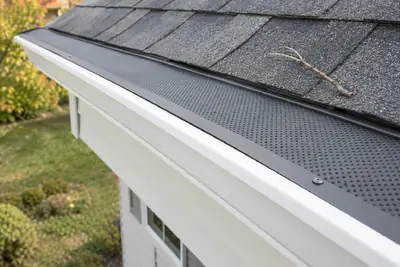
Understand gutter protection
Start with the details that matter.
Start with the debris, not the product name
Look at what actually accumulates near each roof edge: broad leaves, small fragments, seed material or debris from a nearby tree. Note whether the concern appears all year or follows a particular season. Photograph visible accumulation from a safe ground-level position and describe where water spills during rain. Different guard openings and surface designs interact with debris differently, so a demonstration with generic leaves does not answer every question about your property. Ask why the proposed system fits your roofline and maintenance expectations. Keep both the debris and the water path in the discussion.
A guard is one part of the system
A cover or screen cannot resolve every reason a gutter overflows. The assessment may also need to consider the existing gutter condition, attachment, roof valleys, downspout routing and discharge points. Ask what the proposal includes before comparing guard options. If a guard is installed over a system that already needs repair, the original concern may still need separate work. Confirm compatibility with the selected gutter and roof details and how sections remain accessible. A good conversation distinguishes debris control from the condition and arrangement of the complete drainage system.
Ask how cleaning and access will work
Treat any claim that a product needs no attention with care. Ask what material can remain on top, what can enter through openings and how inspection or cleaning is performed. Discuss who removes and reinstalls a section if maintenance is needed and whether that affects the product’s terms. Keep access needs in mind around steep roofs, narrow yards, landscaping and nearby structures. Do not climb to investigate for the sake of an estimate request. Ground-level photos and a clear description are enough to start a professional conversation about the work and safe access.
Compare the proposal through the downspout
Ask for the guard product, affected gutter runs, any included repairs, attachment details and downspout work in writing. Look at where each outlet discharges rather than stopping the comparison at the roof edge. A route across a walkway or toward a troublesome low area needs discussion. Request the applicable product and workmanship documents and identify exclusions before accepting the scope. After completion, keep a simple record of inspection and maintenance recommendations. If water behaves differently in a later storm, a photo taken safely from the ground can help describe the concern without guessing which component caused it.
Before you decide
Look beyond the gutter guard.
Follow the water before choosing the profile
During ordinary rainfall, note where roof runoff lands and which areas overflow, splash or remain wet. Observe from a safe indoor or ground-level location. Mark corners, doors, walkways and downspout outlets in your photos. A gutter is part of a drainage route that begins at the roof and continues after water leaves the downspout. The system should be planned around that route rather than selected only for its color. Repeated overflow might involve debris, alignment, roof geometry, capacity or discharge; the visible symptom does not establish which change is needed.
Compare the entire gutter run
A useful proposal identifies the runs receiving new gutters, the profile and material, corners, outlet arrangement, downspouts, attachment details and removal of existing components. Ask how the condition of the supporting fascia will be reviewed. Accent's gutter services include seamless aluminum systems and screen options, but the selected combination should fit the actual roofline. Different roof sections may concentrate runoff differently. Have sizing and placement assessed for the property rather than assuming every home needs the same specification. Keep any connected fascia, siding or roofing work in the same planning conversation.
Choose discharge points with the yard in mind
Look beyond the roof edge to the places where water will leave the system. Discuss paths, patios, planted areas and nearby structures. A new downspout location can change the way an existing outdoor space is used. Tell Accent about drainage concerns already present on the property and any underground system you know about. The proposal should distinguish gutter work from other drainage or landscape work. If discharge connects to another system, confirm that connection and the responsible scope. A gutter installation should not be described as a guarantee against all yard flooding or every form of water entry.
Understand what guards can and cannot do
Screen and guard choices should be compared against nearby trees, roof debris, maintenance access and the selected gutter profile. Ask what inspection and cleaning remain necessary with the proposed product. Keeping leaves out of one part of the system does not eliminate the need to review outlets and downspouts. Save the product instructions, finish details and warranty documents. After installation, monitor the drainage path during normal rainfall from a safe position and report any concern with photos. Avoid climbing onto a roof or ladder to diagnose an issue for an estimate; the assessment can establish the next step.
Take a closer look
Look beyond the gutter guard.
A clear plan before the first appointment
Bring your priorities, existing product information and any photographs of earlier repairs. Explain whether the work is for your own home, a rental property or a property you are preparing to sell. Discuss access, parked vehicles, pets and the areas that should stay available during the project. If another trade is involved, identify who will handle the connected work and when. Keep selections and assessment notes together, then ask for a written scope that separates preparation, installation, optional details and cleanup. Before traveling for an office visit, confirm the appointment location directly. A regional service-area page or map reference does not establish a walk-in office at the property shown. These steps give the first conversation enough context to produce a useful next action instead of a vague list of products.
Think about connected work before selecting a finish
Exterior elements meet at shared details. Windows interrupt the wall finish, soffit and fascia complete the roofline, and a cover changes where shade and water reach an outdoor space. If several changes are planned, discuss their order before materials are finalized. Completing one surface too early can mean revisiting it when the next part is installed. Ask which existing components will remain and how the proposed work joins them. A coordinated plan can still be completed in stages, provided each stage has a defined scope and the later work is considered without promising an unassessed future conversion.
Use the proposal to compare real choices
Ask for the selected products, affected areas, preparation, removal, finish details, cleanup and exclusions in writing. Keep allowances and optional items distinct from included work. Discuss who handles approvals and related trades, and what happens if concealed conditions are found. Two totals are not directly comparable if they describe different materials or preparation. Keep the documents alongside sample selections and assessment notes so a later decision can be traced to an agreed scope. The goal is a clear project that matches your priorities, rather than a collection of claims about the cheapest price or the fastest possible finish.
Match gutter protection to the debris you actually have
A screen or guard should be considered alongside nearby trees, roof debris and the condition of the existing gutter system. Observe safely from the ground and describe the places where leaves collect or water overflows. Different debris behaves differently, and an outlet or downspout concern may remain even when a guard is fitted. Ask whether the proposed product is compatible with the gutter profile and how inspection or cleaning will be performed afterward. The decision should include maintenance access and the manufacturer's care requirements. A claim that one device eliminates every future task is not a useful substitute for a clearly described system and upkeep plan.
Compare guards as part of a complete drainage proposal
Confirm whether the proposal installs a new gutter system, fits protection to an existing run or combines both. Ask which outlets, corners and downspouts are included and whether the supporting fascia needs work first. If runoff is concentrated by the roof geometry, have the entire arrangement assessed rather than selecting protection in isolation. Discuss where discharged water goes after it leaves the roof edge. Keep product specifications, finish choices and maintenance instructions with the estimate. After installation, observe ordinary rainfall from a safe location and report any concern with photographs. Never climb onto a ladder or roof to diagnose a guard problem merely to prepare an estimate request.
Good questions. Clear answers.
A little clarity before you decide.
Open a question for a straightforward answer. For advice about your own home, tell us what you want to change and where the property is.
Prefer a conversation?
Eastbank 504-888-4733
Westbank 504-341-8178
YOUR PROJECT · YOUR NEXT STEP
Plan gutters around your home’s roof and runoff.
Share your project and city or ZIP. Accent can discuss the existing space, your priorities and the details needed for an estimate.
- Share your project
A short request. Phone or email. No account needed.
- Review scope and estimate
Discuss the assessed work, materials, preparation and exclusions.
- Approve and plan the work
Confirm the agreed scope and installation arrangements with Accent.
Your request starts a conversation. You approve the work before installation.
