
ACCENT · NEW ORLEANS AREA
Restore the flow.
Fix the gutter problem. Start with a clear repair or replacement assessment.
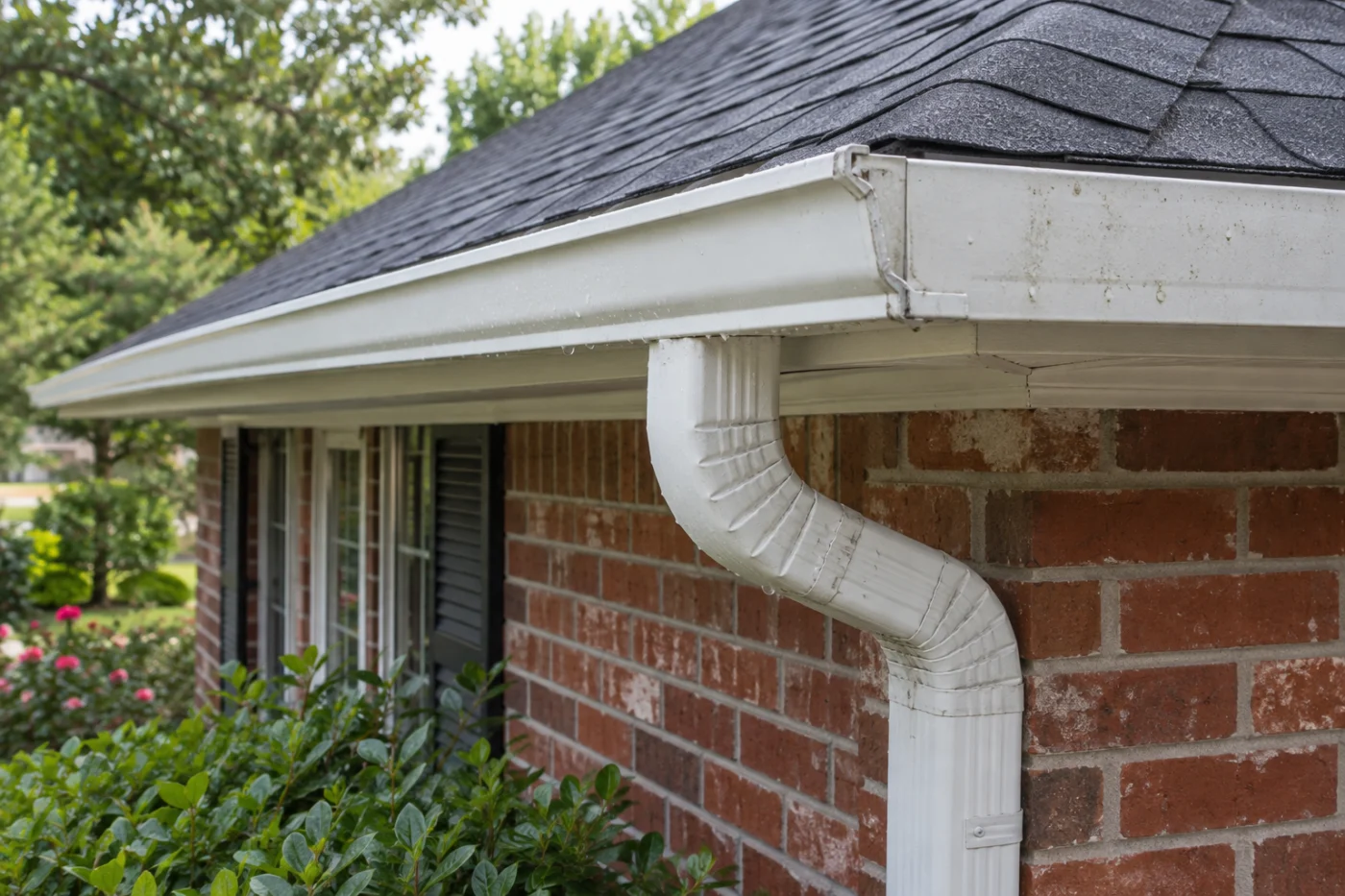
The corner, the connection and the route away from the roof.
Follow the problem to the right scope.
Gutter problems are easy to describe and harder to judge from one photograph. Water at a corner could involve a joint, a connection, the way a section is supported or another condition along the run. Accent Home Improvements installs seamless gutters in the New Orleans area. If your existing system needs attention, send the details and ask for an assessment of the appropriate work. The conversation may involve a limited repair, a replacement section or a more connected gutter scope. We will use the condition of the home and your priorities to discuss the next step. This page helps you prepare the information needed to compare those options rather than assuming every leak needs the same fix.
1 · PROJECT DETAILS
Show where the concern happens.
Tell Accent where you see water, movement or damage and what is happening when you notice it. An overflowing section during rain is a different observation from a loose downspout on a dry day. Explain whether the concern is limited to one corner or appears along several roof edges. These details make the first discussion more useful.
If safe ground-level photographs are available, include the whole gutter run, the affected area and where the downspout ends. Mention any recent roof, fascia or patio changes. Do not get onto a ladder to complete the enquiry. The photographs can organize the request, but the condition and appropriate scope still need to be assessed. Describe what you see without feeling that you need to diagnose the cause yourself.
2 · PROJECT DETAILS
Review the run and its connections.

From Accent’s existing photo collection.
A gutter section works with its supports, joints, outlets and downspouts. A proposal focused only on the most visible drip may miss the conversation about adjoining components. Ask which parts of the existing run can remain and which connections would be disturbed by the proposed work.
The material and condition of the system influence whether a targeted repair is practical. Matching a profile or connecting a new section to an older one may need review. Discuss the expected appearance as well as the work itself, especially on a prominent front elevation. A useful scope identifies where the new work stops, how it joins the retained system and any limitations that remain outside the proposed area. That makes the estimate easier to evaluate.
3 · PROJECT DETAILS
Include fascia and the roof edge.
The gutter is connected to the home, so the supporting edge deserves attention too. Mention visible fascia damage, separated trim or concerns at the soffit when requesting the assessment. Those observations do not automatically establish a structural issue, but they should be part of the discussion about the relevant exterior conditions.
Ask whether any supporting material needs further evaluation and how concealed conditions would be handled if found during removal. Roof work and gutter work are related, yet neither should be assumed to include the other. The written proposal should distinguish gutter components from any included fascia, soffit or roofing work. If separate trades or phases are involved, clarify the sequence before a freshly completed section is disturbed for another part of the project.
Explore the exterior details.
Browse Accent’s existing photo collection, then tell us which materials, proportions and outdoor features interest you.


Bring the details together.
Tell Accent what you want to change, where the home is and which connected improvements you are considering. A clear request makes the next conversation useful.
4 · PROJECT DETAILS
Compare repair with connected replacement.
A limited repair may be worth discussing when a concern is isolated and the existing system can accept the work. Replacing a larger run may deserve consideration when several sections are affected or compatible connections are difficult. Those decisions should follow the assessment rather than a rule that every drip requires a complete new system.
Ask for clearly defined options where appropriate. Which joints, outlets and downspouts are included in each? Does the proposed work address one symptom or a connected set of conditions? Comparing that information helps you understand differences in the totals. Tell Accent if you are also considering a roof or patio cover change, because the best boundary for today’s gutter work may depend on what you intend to do next.
5 · PROJECT DETAILS
Think about the downspout destination.
From Accent’s existing photo collection.
The end of the downspout is part of the customer experience. A route beside an entry, a frequently used walkway or a patio furniture area can be inconvenient even when the upper section looks tidy. Explain where people walk and which parts of the yard you use so outlet placement can be discussed in context.
A gutter scope should identify its discharge arrangement and any work that is excluded beyond that point. Underground drainage, grading and broader site conditions should not be assumed to be included. If you have an existing drain connection, share what you know about it and ask what further review is needed. The aim is to define the proposed route clearly without promising that a gutter change alone resolves every water condition around the property.
6 · PROJECT DETAILS
Get a clear assessment and estimate.
Prepare the address, a description of the affected run and your preferred contact details. Mention access restrictions, pets, gates and anything stored against the wall. Ask Accent what assessment is needed and whether the proposed work is a repair, partial replacement or new system scope.
Before authorizing work, review the materials, included outlets, removal responsibilities, disposal and treatment of adjacent finishes. Clarify how any changes would be approved and when availability can be confirmed. If you are asking about gutter guards or another accessory, discuss compatibility and future access as part of that decision. A clear written scope gives you a practical basis for moving forward and helps keep the conversation focused on the conditions at your own home.
GOOD QUESTIONS. CLEAR ANSWERS.
Before you decide.
Explore the details below, then ask about the conditions and choices specific to your home.
Explore the connected work.
Make the next step a clear one.
Share your property location and priorities. Call Eastbank 504-888-4733 or Westbank 504-341-8178, or send your project request. Office visits are by appointment.
YOUR PROJECT · YOUR NEXT STEP
Plan gutters around your home’s roof and runoff.
Share your project and city or ZIP. Accent can discuss the existing space, your priorities and the details needed for an estimate.
- Share your project
A short request. Phone or email. No account needed.
- Review scope and estimate
Discuss the assessed work, materials, preparation and exclusions.
- Approve and plan the work
Confirm the agreed scope and installation arrangements with Accent.
Your request starts a conversation. You approve the work before installation.
