
ACCENT HOME IMPROVEMENTS
Related work. Separate boundaries. Bring the exterior plan into one current brief.
A whole-home exterior brief connects related service requests without making them one undefined promise. You may want to discuss siding, windows, gutters, roofing or an outdoor area, with different priorities and decisions for each. Use this guide to prepare a coordinated enquiry for Accent Home Improvements in Greater New Orleans. The brief records the relationships; the actual offers and assessments establish which work is proposed, by whom and at which locations.
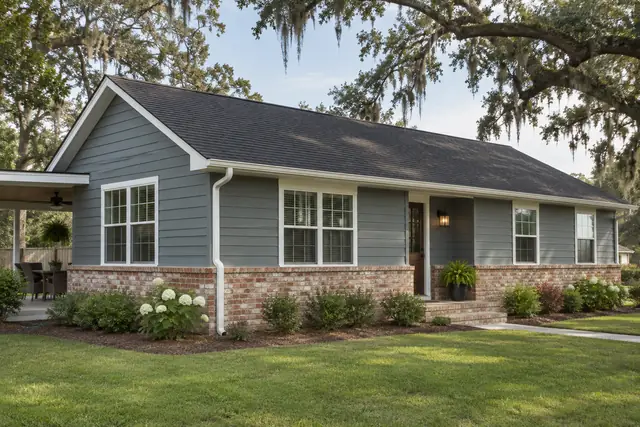
Choose the main result before listing every possibility
Write a short statement explaining the primary exterior improvement you want to discuss at this property. It might concern a wall finish and nearby windows, or a patio area with questions about an adjoining roof edge. Then list possible additional services separately. A whole-home heading should not turn every idea into included work. Identify which result matters most and which choices can wait for more information. Accent’s service pages explain the relevant service discussions; the combined brief gives those requests a shared property reference. It should help the provider understand the enquiry before any actual offer, product selection or work arrangement is assumed.
Give the property one shared location system
Use recognizable exterior areas such as front entry, driveway side, rear wall and patio corner across the whole file. Keep individual window or roof references attached to those areas. A wider house view can explain the relationships, while a separate detail identifies the particular question. Avoid creating a new set of left-and-right labels for every service. If two household members use different names for an area, resolve the reference before circulating selections. This common location system does not determine responsibility or technical requirements. It gives each actual offer, open question and future revision a place that the household and relevant providers can identify consistently.
Keep each requested service in its own entry
Create a separate entry for each service interest, even when the areas meet. Record the requested change, affected locations and features you hope to retain. Mark optional work explicitly. For example, a siding enquiry can refer to adjoining window trim without assuming that window replacement is included. A patio-cover request can identify a nearby gutter without creating an undefined drainage project. Ask Accent which parts fit its offered services and what assessment is needed. If another provider is involved, retain its actual documents separately. The combined file should connect the conversations while preserving what each one actually concerns.
Make the interfaces visible as unanswered questions
An interface is a place where two parts of the requested project meet: a window in a siding wall, a gutter beside fascia or a patio attachment near an existing roof. Name the connection and explain what you want clarified. Do not decide the remedy or installation order from a photograph alone. Ask which party should assess the relevant condition and how the actual offers will describe the connected work. Keep the response with the matching location reference. A good interface entry can remain unresolved while the proper information is gathered; hiding it behind a broad project total makes the next discussion harder to understand.
Build the combined brief from the working fields
The fields below create a shared index, not a replacement for the individual service detail. Start with the primary goal, then add a location and requested-service entry for each area. Link the relevant siding, patio, window, gutter or roofing brief where useful. Identify retained features and unresolved interfaces in their own lines. Keep estimated dimensions and preliminary preferences labeled as such. A dated current version helps prevent an early optional idea from becoming a later assumed inclusion. The result should be short enough to accompany the service documents while still explaining how those documents relate to the same house and household priorities.
Your working record fields
- Primary property goal
- The main result you want to discuss.
- Area and service
- One location reference and requested service per entry.
- Retain
- Existing features the household hopes to keep.
- Interface question
- The meeting point that needs clarification.
- Current or later
- First request, optional work or possible future phase.
- Source documents
- Actual offers, relevant photographs and assessment references.
- Decision contact
- Person returning consolidated household selections.
Distinguish the first request from possible later phases
If you are considering work over more than one stage, identify the first enquiry and keep later possibilities in a separate section. Explain any relationship you want the provider to consider, such as retaining a finish that may be relevant to a later window discussion. Do not invent a construction sequence or assume that a future idea has been assessed. Ask how the actual proposed work addresses the stated interfaces and what remains outside the offer. Household timing preferences can be recorded, but they are not confirmed arrangements. Each phase needs an understandable scope rather than a broad promise that every exterior issue will be handled together.
Patios →
Compare offers at both service and property level
When actual offers are available, check each against its service entry before comparing the overall picture. Identify the locations, proposed work, selections, retained components and exclusions. Then examine the unresolved connections between offers. If a combined total is provided, keep the full descriptions beside it so the price does not replace the scope. Ask about meaningful differences between alternatives rather than assuming that each covers the same work. The proposal-comparison guide supports that stage. Keep any response attributed to its actual source, and do not rewrite a provider’s document as though a household summary creates a new inclusion or responsibility.
Use one current index as the discussion develops
Send Accent the property location, primary goal, service list, relevant photographs and the most important interface questions. Ask what further assessment or information is needed. Identify who will return consolidated household selections while keeping each provider’s own contact and documents clear. When an item changes, record the affected service and location rather than silently updating the entire brief. Retain meaningful earlier versions with dates. If work proceeds, the agreed scopes and actual handover documents become the project records; the combined brief remains a useful starting reference that explains how the requests were connected without erasing their individual boundaries.
GOOD QUESTIONS. CLEAR ANSWERS.
Your combined exterior brief questions.
Use these answers alongside the assessed conditions and choices for your own property.
YOUR PROJECT · YOUR NEXT STEP
Turn your project ideas into a clear next step.
Share your project and city or ZIP. Accent can discuss the existing space, your priorities and the details needed for an estimate.
- Share your project
A short request. Phone or email. No account needed.
- Review scope and estimate
Discuss the assessed work, materials, preparation and exclusions.
- Approve and plan the work
Confirm the agreed scope and installation arrangements with Accent.
Your request starts a conversation. You approve the work before installation.
