
ACCENT HOME IMPROVEMENTS
Product samples. Compare the detail beside your home.
Bring the finish, profile and retained materials into the same conversation. A useful sample review connects an appearance preference with the exact product information and the area where it is being considered.
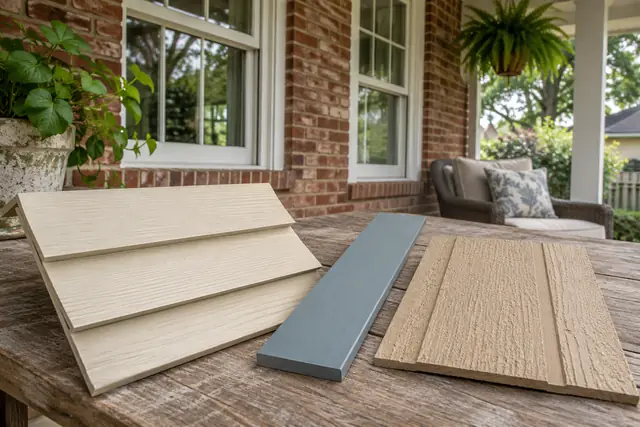
Give the sample an exact identity.
Keep the product name, profile, finish and identifying information with the sample when those details are supplied. A small piece can become difficult to identify after several options are placed on the same table. Label the information you know and mark unknown details as questions. If a photograph or online reference prompted the selection, keep that reference beside the actual sample record. Ask whether the piece represents the exact option being offered or only a general appearance direction. This distinction helps the household carry one understandable choice from the sample discussion into the written offer. It also reduces the chance that a preferred color is remembered while the profile, finish or associated product information is lost.
Look at the sample beside retained materials.
Bring the existing brick, trim, windows, doors and roof color into the appearance discussion. Photographs can help when the sample cannot be viewed beside the relevant area, but label the conditions in the photograph. Identify the retained material that matters most to the household. A cream sample beside a red-brick wall can communicate a different preference from the same piece shown against a white table. Explain the relationship you enjoy, such as a quiet contrast or a trim color that ties two areas together. Keep the actual property view with the sample notes. The purpose is a considered selection for that home, with any matching question left visible for the assessment.
Separate color, texture and profile observations.
Write a short note for each feature you are comparing. Color concerns the preferred visible palette; texture concerns the surface appearance; profile concerns the shape or pattern of the offered component. Naming these separately can explain why two similar-looking pieces produce different preferences. For siding, a small sample may help discuss the visible course or trim relationship. For a patio finish, note the existing wall and other components it will sit beside. Ask which additional information or larger example would clarify the choice. Keep the observation connected to the exact piece, because a general statement such as “we like the blue one” can lose its meaning once more options are introduced.
Use product documentation for performance questions.
A physical finish sample helps explain appearance. For a performance question, ask for information about the actual proposed product and its relevant rating or specification. Window options provide a useful example: ENERGY STAR explains how NFRC information supports comparison of window performance. A color piece alone does not provide that information. Keep the exact document and offered option together, and ask which statement applies to the product being discussed. Avoid transferring a claim from an unrelated brochure or example photograph. This keeps the review grounded in the particular selection without assuming that every sample represents a certified product, the same performance or an identical installation arrangement.
Consider how the selected area will look together.
A piece viewed by itself may not explain an entire wall, gable or patio arrangement. Use the marked property photograph to show where the proposed finish belongs and where it stops. Identify corners, openings, trim and other visible components that are part of the offered arrangement. Ask which of those pieces share the finish and which have their own selection. If the preference is an accent area, keep that boundary clear. This gives the assessment a more complete appearance question than a single swatch can carry. A reference photograph can supplement the review when its particular feature is identified, while the actual scope and product choice remain tied to the homeowner’s property.
Write down the choices that remain open.
Use a short list distinguishing preferred, selected and undecided items. A household may agree on the main wall color while still considering corner trim or a patio component. Name the remaining decision and the information needed to make it. Ask whether an alternative changes the offered scope or price before treating it as an interchangeable option. If timing or availability matters, request current information about the particular selection. Keep the date of the discussion with the record. This helps the household understand which choices are ready to be reflected in an offer and which still need clarification, without treating a sample left on the table as an accepted final selection.
Patios →
Check the sample against the written offer.
When the proposal is available, compare its product and finish description with the sample record. Match the identity, the area involved and the visible components discussed. Ask about any difference in wording or any component whose selection remains unclear. Keep optional alternatives separate so the base offer can be understood on its own. If a different finish is requested, use the project change record to preserve the question and the resulting written clarification. The proposal-comparison guide can help organize the complete offered work, while the sample page stays focused on the selection itself. This connection makes it easier to follow a choice from a physical piece to the particular work being considered.
Keep the selection record for later questions.
Save the supplied product details, dated sample photographs and the selection reflected in the agreed scope. Identify any care document provided for that option and keep it with the same product record. A later maintenance or replacement question can then start with the actual selected information. For the first Accent enquiry, describe the service and property area, show retained materials and explain the sample question you want assessed. A sample can be discussed before every selection is settled. The useful goal is a clear record of the household’s preference, the option under consideration and the remaining questions, giving the next conversation a practical reference that goes beyond the color of one loose piece.
GOOD QUESTIONS. CLEAR ANSWERS.
Your product samples questions.
Use these answers alongside the assessed conditions and choices for your own property.
YOUR PROJECT · YOUR NEXT STEP
Turn your project ideas into a clear next step.
Share your project and city or ZIP. Accent can discuss the existing space, your priorities and the details needed for an estimate.
- Share your project
A short request. Phone or email. No account needed.
- Review scope and estimate
Discuss the assessed work, materials, preparation and exclusions.
- Approve and plan the work
Confirm the agreed scope and installation arrangements with Accent.
Your request starts a conversation. You approve the work before installation.
