
ACCENT · TERRYTOWN SERVICE AREA
Roofing. Terrytown.
Compare options for an older roof without assuming the answer.
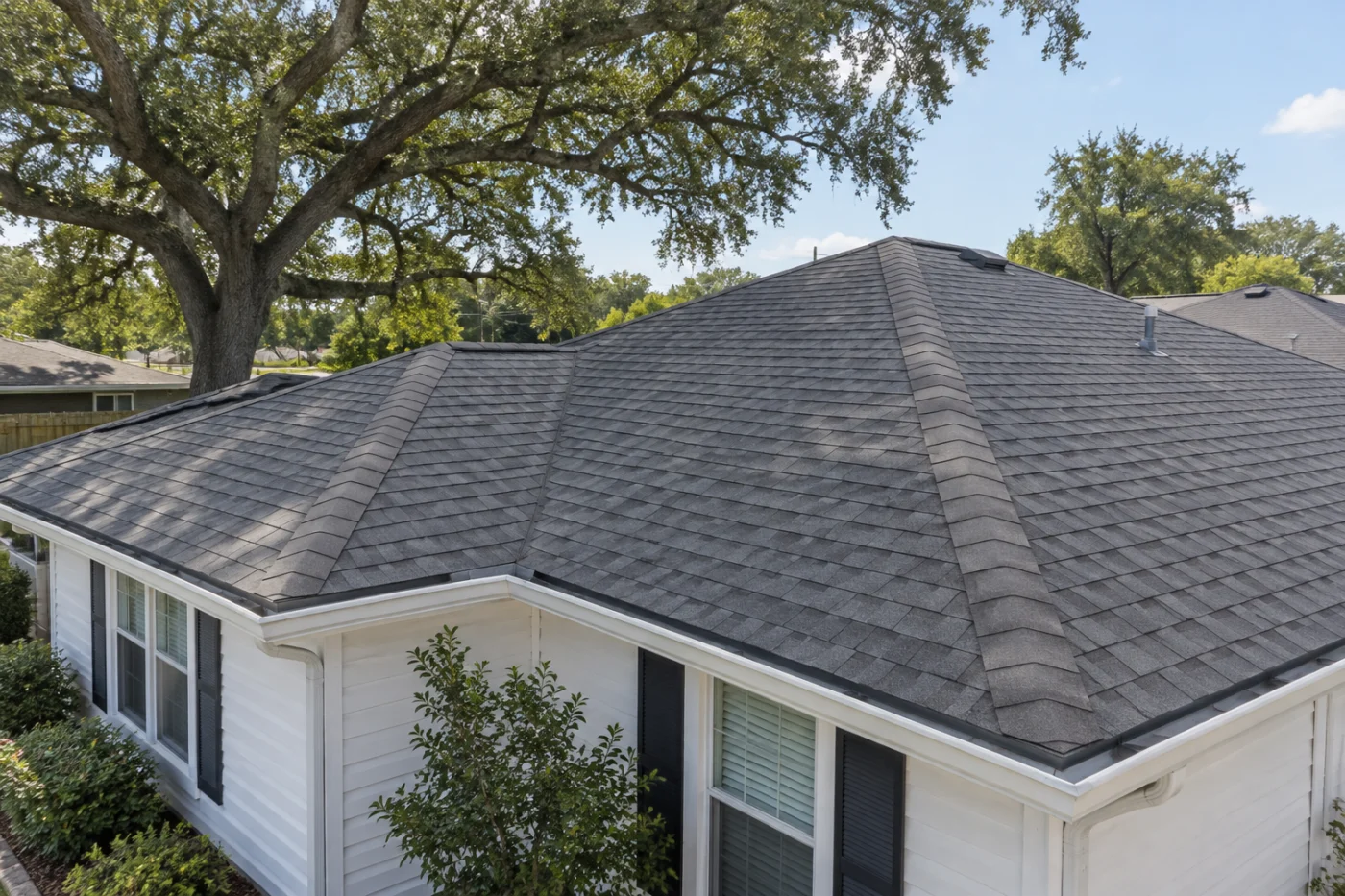
A residential covering shown with its surrounding roofline context.
Use the condition and proposed scope to guide the decision.
A Terrytown homeowner may begin a roofing enquiry because the covering looks older, a repair has been repeated or a particular area now raises concern. Those observations deserve assessment before they are treated as the same reason for a complete replacement. Accent Home Improvements can discuss a roof review and a clear boundary for the work proposed. This page focuses on comparing options and the information that makes estimates understandable. Send the Westbank team your address, safe overall photographs and available records of earlier work. Explain the concern and connected exterior priorities so the next step can identify actual products, preparation and completion responsibilities rather than relying on age, appearance or a broad package name alone.
1 · PROJECT DETAILS
Separate age, appearance and observed concerns.
Describe what changed and where you notice it. An older appearance, a visible roof-edge issue and a mark inside the house are different observations. Identify the room or roof area and explain when the concern appears without assuming a concealed cause. Overall photographs help show nearby planes, walls and edges, while safe close views can add context if obtainable from the ground.
Share previous repair and product records where available. Ask what the assessment can establish and what may remain concealed until work begins. A useful recommendation should explain the proposed work area and boundary rather than treating a single observation as proof of every hidden condition. This gives the homeowner a practical way to discuss a defined repair or broader replacement and compare what each option actually addresses, including what remains outside the current agreement.
2 · PROJECT DETAILS
Compare preparation and system details, not only totals.

From Accent’s existing photo collection.
Ask for the actual proposed covering and related components. For a shingle scope, review how underlayment, flashing, starter and ridge details and ventilation are addressed where relevant to the assessed roof and selected products. A color sample or general material label is not the complete installation. Keep optional appearance upgrades distinct from the work needed to complete the agreed scope.
Confirm removal, disposal, preparation and responsibilities at gutters, fascia, soffit, walls and any patio cover. Connected components are not automatic inclusions in every roofing proposal. Ask how concealed findings or substitutions would be documented and approved before additional work proceeds. Equal-looking roofs or similar total prices may describe different preparation and finishing boundaries, so the useful comparison is the actual selected system and responsibilities at the same property rather than a general new-roof description.
3 · PROJECT DETAILS
Plan the work around the home and retain the record.
For Terrytown approval questions, use Jefferson Parish Building Permits for the address and proposed work and agree who handles required steps. Check applicable association review separately. Tell Accent about driveway use, side access, pets and the entrances that need to remain available. Mention connected siding, gutter or cover intentions so the relevant interfaces and sequence can be discussed before scheduling.
Ask how weather-related changes or interruptions will be communicated and avoid treating a universal duration as a promise for every home. At completion, keep the selected products, scope, approved changes, care information and applicable warranty documents. Review included areas and connections against that record, with any separate work identified. This supports future maintenance without implying that a new covering renews every hidden building component or guarantees immunity to every storm, leak or later concern around the roof.
Explore the exterior details.
Browse Accent’s existing photo collection, then tell us which materials, proportions and outdoor features interest you.


Bring the details together.
Tell Accent what you want to change, where the home is and which connected improvements you are considering. A clear request makes the next conversation useful.
4 · PROJECT DETAILS
Compare the complete proposed roof scope.
A roofing proposal should name the selected covering and the work areas rather than rely on a general promise of a new roof. Ask which existing materials are removed, which components remain and what preparation is included. Discuss the visible roof edges, adjoining walls and penetrations that affect the scope. Product-specific details need to suit the assessed roof and selected system; one material label or a photograph cannot establish the complete installation approach.
If removal reveals a concealed concern, agree how it will be documented and brought to you for approval before additional work proceeds. Keep repairs, disposal and finishing responsibilities understandable. A replacement scope should not imply that every hidden component or adjoining wall is renewed unless stated. Compare proposals by those included responsibilities and actual products, with optional changes separated so their purpose is clear instead of hidden within a total.
5 · PROJECT DETAILS
Keep roofline connections and handover records clear.
From Accent’s existing photo collection.
Gutters, fascia, soffit and patio covers may meet the roof without automatically being part of the roofing agreement. Identify connected work during assessment and ask who handles removal, reinstatement and finishing at each boundary. An electrical or mechanical item near the roof may involve another provider. Do not assume a broad roofing description includes every attached component simply because access occurs in the same part of the house.
Retain the selected product information, agreement, change records, care guidance and applicable warranty documents at completion. Review the included roof areas and agreed interfaces, including any separate work that remains. These records help future maintenance and later exterior projects begin with an accurate account of what changed. No roof should be described as immune to all storms, leaks or future maintenance, and an image of a finished roof is not proof of a particular performance rating.
6 · PROJECT DETAILS
Arrange a property-specific next step.
Send the Terrytown address, safe overall photographs and your priorities to Accent. Mention access restrictions, the features that should remain and any connected exterior work under consideration. Ask who confirms the applicable approval process for the actual address and scope; a similar nearby installation does not establish requirements for your project. The team can discuss current availability and the assessment needed before final dimensions, products and responsibilities are agreed. Office visits are by appointment, and the project form is available if you prefer to begin the conversation in writing.
GOOD QUESTIONS. CLEAR ANSWERS.
Before you decide.
Explore the details below, then ask about the conditions and choices specific to your home.
Explore the connected work.
Make the next step a clear one.
Share your property location and priorities. Call Eastbank 504-888-4733 or Westbank 504-341-8178, or send your project request. Office visits are by appointment.
YOUR PROJECT · YOUR NEXT STEP
Get a clearer scope for your roofing project.
Share your project and city or ZIP. Accent can discuss the existing space, your priorities and the details needed for an estimate.
- Share your project
A short request. Phone or email. No account needed.
- Review scope and estimate
Discuss the assessed work, materials, preparation and exclusions.
- Approve and plan the work
Confirm the agreed scope and installation arrangements with Accent.
Your request starts a conversation. You approve the work before installation.
