
ACCENT · RESERVE SERVICE AREA
Reserve gutters.
New seamless gutters begin with a clear picture of the roof edges and the places water needs to go.
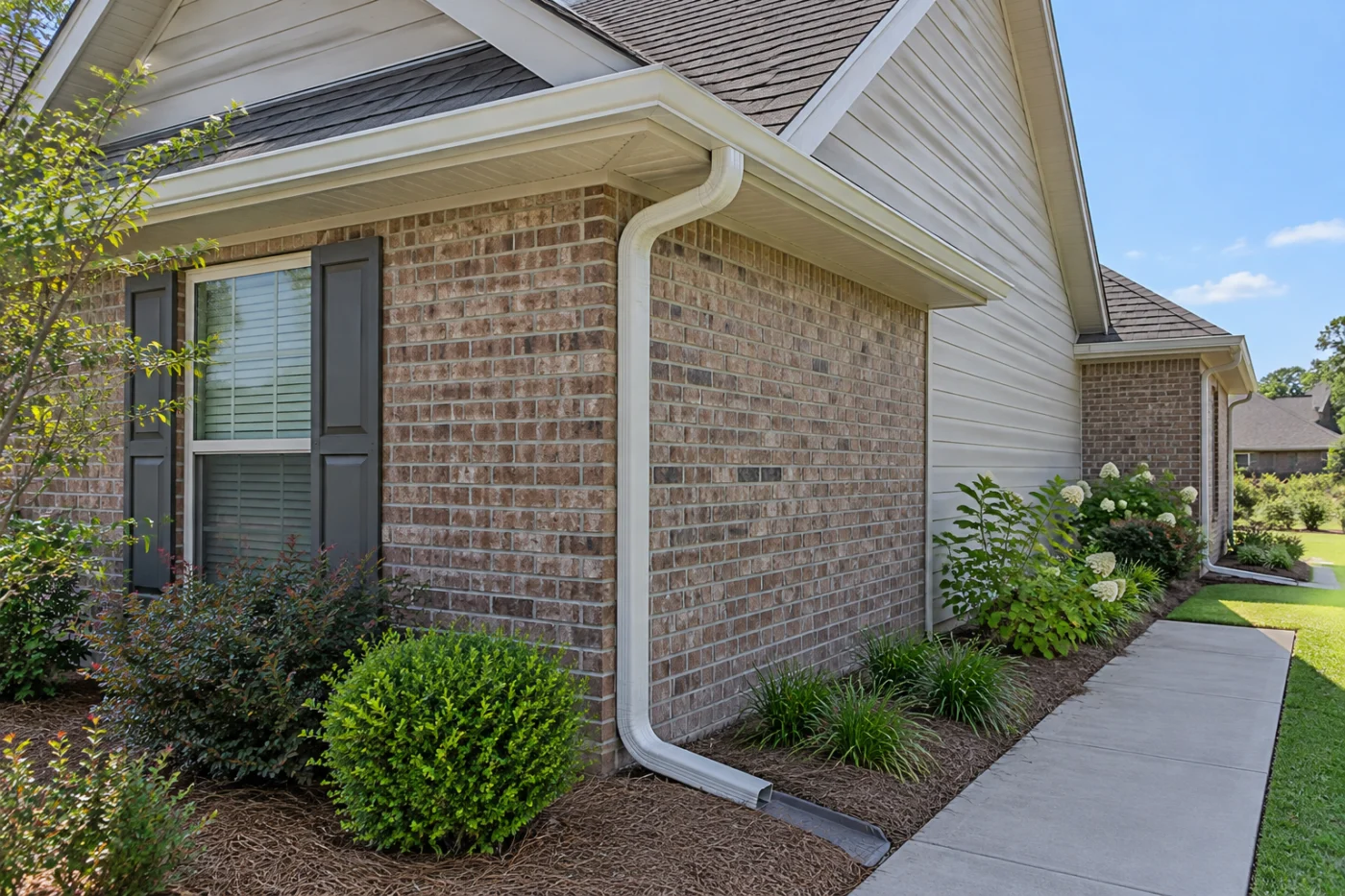
The collection route considered with outlet positions and everyday access.
Start with the trouble spot. Plan the complete gutter route.
Water beside a doorway is easy to notice. Choosing the right gutter work takes a wider look at the roof, existing outlets and ground below. For a Reserve home, start by telling Accent where the trouble appears and what you want the new installation to improve. A single replacement run, a changed downspout route and a larger gutter replacement are different projects. An assessment can turn those observations into a defined layout, with preparation and discharge responsibilities recorded before you compare prices. You do not need to arrive with a diagnosis or select a gutter size yourself.
1 · PROJECT DETAILS
Build a useful record of what happens during rain.
Describe a normal example from memory or observations made safely indoors: water crossing a step, an outlet emptying beside parked vehicles, or a roof edge spilling above a seating area. Say whether the concern began after another exterior project, if you know. A simple note about the location and circumstances is more useful than a confident guess about the cause. Do not climb to gather measurements or stand outside in severe weather. Existing photographs and a broad view from the ground can begin the conversation without exposing anyone to a hazard.
Give each affected area an ordinary name, such as the kitchen entrance or driveway corner, so photographs and estimate notes refer to the same place. Include the roof edges to either side and any cover that meets them. A close photograph may show a stain while hiding the roof arrangement above it. Share receipts or a prior layout if available, but missing paperwork should not prevent an enquiry. Accent can review what is present and identify which details require assessment before the proposed installation is specified.
2 · PROJECT DETAILS
Follow the water beyond the bottom elbow.

From Accent’s existing photo collection.
Trace the visible downspout from the roof edge to its current endpoint. Then describe the area around that endpoint: a gate, planting bed, paved walk, stored bins or an entrance. An outlet moved a short distance may change how the household uses that space. Ask the estimate to identify the proposed termination, rather than stopping its description at a matching pipe color. Where the desired route meets an underground connection or another provider’s work, name that interface explicitly so everyone understands which portion belongs to the gutter installation.
A wet yard is a separate observation from an overflowing roof edge. New gutters should not be sold as an unexplained cure for every drainage concern at the property. Ask what the assessed work addresses and what remains outside it. If future paving or a patio cover could change the intended discharge route, bring that plan into the discussion now. The aim is an installation with understandable endpoints, followed by clear responsibility for any further ground or drainage work, rather than an assumption that one contractor is changing the entire property.
3 · PROJECT DETAILS
Set the repair and finish boundaries before installation.
Fascia and soffit meet the gutter but remain separate materials. Point out visible deterioration, earlier patches and adjoining finishes you want retained. Ask whether removal, disposal, attachment preparation and any fascia repair appear as individual inclusions in the proposal. Hidden findings can affect the agreed work, so establish how they will be photographed, explained and approved. This gives the homeowner a way to consider a change before it becomes an additional charge. It also keeps new gutter work from obscuring a disagreement about the surface behind it.
Choose finishes after the route and preparation are understood. Compare the actual available gutter and downspout samples with retained trim, brick and siding, then keep the selected descriptions with the agreement. A matching name on two products does not establish an exact visual match. Provide the Reserve property address and any written association instructions with your request. The local resource linked below can help begin questions about the proposed work; responsibilities and requirements should be confirmed for the actual property. Accent’s Eastbank line and estimate form offer a direct next step.
Explore the exterior details.
Browse Accent’s existing photo collection, then tell us which materials, proportions and outdoor features interest you.


Bring the details together.
Tell Accent what you want to change, where the home is and which connected improvements you are considering. A clear request makes the next conversation useful.
4 · PROJECT DETAILS
Separate retained runs from the new installation.
For a partial replacement, mark the existing runs that remain and the runs proposed for removal. Ask how each new section begins, turns and ends, and which existing outlets are retained. Seamless describes the gutter run; a complete system still contains other components and connections. A sketch or clearly labeled photographs can make two estimates easier to compare than a total length alone. Ask for the stated product, selected components and included installation work, keeping any guard option separate enough to evaluate on its own merits.
Consider the condition of the retained system alongside the new section. Ask whether an existing corner or downspout is part of the assessment and whether adjustment is included. Describe any earlier repairs without assuming that their cause was resolved or that all old material needs replacement. For broader product information, see Accent’s gutter services overview. If the concern begins with understanding an existing problem, the gutter repair assessment page explains the separate assessment conversation before installation choices are finalized.
5 · PROJECT DETAILS
Keep a practical record for the next rainy day.
From Accent’s existing photo collection.
At handover, walk through the agreed route from safe ground-level positions. Confirm the included roof edges, outlet locations and finishing work against the proposal, and ask about care information for the supplied components. Keep the description of separate drainage work beside the installation record. If you notice another concern later, a dated photograph and a precise location help explain it. That record is more useful than a broad statement that the whole system failed, and it avoids confusing new work with an unchanged part of the property.
Your first request can be short: ‘Reserve home, water beside the side entrance, existing front gutters to remain, considering a new patio cover later.’ Add safe overall photographs and explain the best way to arrange an assessment. Exact dimensions and final selections come after the property is reviewed. If guards are being considered, ask about the named product and its maintenance guidance instead of assuming that an accessory removes every care task. Clear initial priorities help Accent prepare a conversation about the work you actually need, with fewer unexplained assumptions.
GOOD QUESTIONS. CLEAR ANSWERS.
Before you decide.
Explore the details below, then ask about the conditions and choices specific to your home.
Explore the connected work.
Make the next step a clear one.
Share your property location and priorities. Call Eastbank 504-888-4733 or Westbank 504-341-8178, or send your project request. Office visits are by appointment.
YOUR PROJECT · YOUR NEXT STEP
Plan gutters around your home’s roof and runoff.
Share your project and city or ZIP. Accent can discuss the existing space, your priorities and the details needed for an estimate.
- Share your project
A short request. Phone or email. No account needed.
- Review scope and estimate
Discuss the assessed work, materials, preparation and exclusions.
- Approve and plan the work
Confirm the agreed scope and installation arrangements with Accent.
Your request starts a conversation. You approve the work before installation.
