
ACCENT HOME IMPROVEMENTS
Patio cover care. Know the cover you own.
How long should your patio cover last, and what care does it need? Begin with the actual product, its condition and its records. A material name alone cannot give a dependable remaining life. Use this guide to organize care questions, document changes and decide what to discuss before cleaning, altering or replacing a cover.
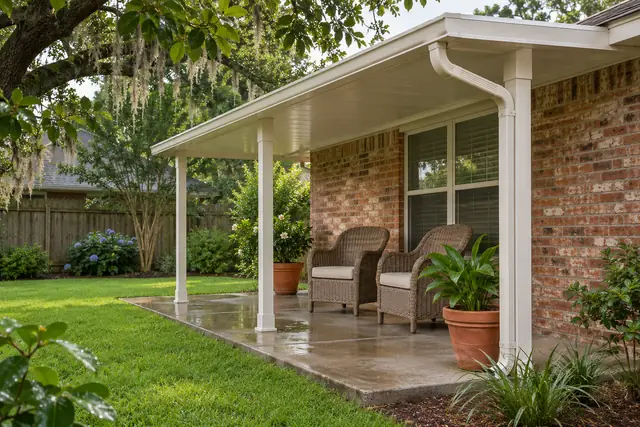
Identify the cover before choosing a care method.
Look for the original proposal, invoice, product information or handover folder. Record the manufacturer and system if they are known, the approximate installation date and any later alterations. A cover described as aluminum may still have different coatings, roof panels, connections and accessories from another aluminum system. Keep unknown details marked as unknown. A broad photograph can help explain the arrangement, but it should not be used to guess a precise product identity. Ask which records would help establish the applicable care information. If the house came with an existing cover, retain the seller's information separately from details that have been confirmed. Your first useful step is a product-and-history record that can support the next conversation about cleaning, visible change or a proposed replacement.
Separate service life, appearance and warranty terms.
A cover can raise several different questions: whether you still like its appearance, whether it suits the way you use the patio, what a visible condition means and which written warranty provisions may apply. Keep those questions separate. An online lifespan range does not establish how many years remain for your existing cover. A warranty period is a term in a particular document, not a condition assessment or a promise that every component will need no care throughout that period. Record the actual product and installation information before asking about any applicable coverage. Accent can discuss the offered patio work after reviewing your enquiry. Ask what assessment is needed and request the relevant current product documents for a proposed system rather than transferring another brand's general claim to your house.
Build a short condition history from ordinary observations.
Take broad photographs from accessible ground-level positions and label the view and date. Record the concern you can actually see, such as a new mark, an area of staining, a visibly changed edge or water appearing somewhere you had not noticed before. Avoid turning the observation into a diagnosis. Add when it was first noticed, whether it happens under particular conditions and any previous work near the same location. An older wide photograph can make a change easier to explain than a new close-up alone. Keep the history with the product record so an assessment conversation can consider both. If an area cannot be seen safely, say so. The record should support a professional review without asking the homeowner to climb onto the cover, remove panels or test a connection.
Use the applicable manufacturer's cleaning instructions.
Before choosing a brush, cleaner or washing method, locate the instructions for the identified product and finish. As one product-specific example, Amerimax's published aluminum care guidance describes gentle washing for moderate dirt and calls attention to sheltered areas that receive less rainfall. That example does not identify the cover at your property, establish an Accent supplier relationship or make the same procedure suitable for every finish. Use the current document for your actual system and ask about an unfamiliar stain before experimenting. Keep the instructions and the product label together. This page does not prescribe cleaning mixtures, pressure settings or a roof-access method. If you arrange professional cleaning, share the applicable care information and make the intended work and access arrangements clear before the visit.
Keep runoff observations separate from a repair decision.
Describe where you see water during normal weather observations made from a sheltered, safe location. Name the edge, gutter, downspout or nearby doorway and note whether the behavior is new. Photographs taken afterward can show a mark or accumulation without requiring someone to stand in heavy rain. Ask what assessment would establish the cause and the appropriate next step. Adding sealant, changing an outlet or replacing a panel is a separate decision that should follow that discussion. The dedicated runoff and replacement guides cover design and scope questions in more detail. For ongoing care, keep a short dated observation record, any prior work at the location and the applicable product information. That keeps a new symptom from becoming an unsupported assumption about the entire cover's remaining life.
Review additions and changes before attaching them.
List anything added after the original cover was installed, along with what you are now considering. Lights, fans, screens, decorative items and a later enclosure can raise separate product, structural or trade questions. Do not assume that a cover can accept an accessory because a similar-looking installation appears in a photograph. Ask about the specific system and the responsible assessment or qualified trade. Keep the answer with the product record and confirm whether an alteration affects applicable care or warranty terms. This guide does not offer attachment details or approve an existing addition. When asking Accent about replacement or a new patio arrangement, explain which accessories you hope to retain and which are only ideas. Treat each unconfirmed change as a question until the offered work and its responsibilities are clearly established.
Compare continued care with a defined replacement enquiry.
If you are considering replacement, explain what has prompted it. The reason may be an assessed condition, a new layout preference, a different covered area or several concerns that need review. Separate those goals from the condition history so a proposal can address the actual decision. Identify the parts you hope to retain, including the floor, adjoining wall finishes and nearby openings. Their suitability belongs in the assessment; a sound-looking surface in a photograph cannot settle it. Ask which alternative is being offered, what is included in removal and finishing and what remains outside the scope. Compare the complete proposed work rather than assuming that a new roof panel, a new cover and a revised enclosure are interchangeable solutions to the same problem.
Keep the handover folder useful after the project.
For newly agreed patio work, ask which product identification, care instructions, warranty documents and completion records will be supplied. Save them with the final proposal and any agreed changes. Add a dated entry when maintenance, assessment or later alteration occurs, using the same view names as your photographs. You do not need a complicated maintenance app: a small folder and a continuing note can keep the important information together. When contacting Accent, send the location, broad views, known product details and the particular change or replacement question. Ask for the next appropriate assessment step. Keep the response with the record so later conversations begin with the current information. The goal is to make care and replacement decisions easier to explain throughout the time you own and use the patio.
GOOD QUESTIONS. CLEAR ANSWERS.
Your patio cover care questions.
Use these answers alongside the assessed conditions and choices for your own property.
YOUR PROJECT · YOUR NEXT STEP
Make more use of your patio.
Share your project and city or ZIP. Accent can discuss the existing space, your priorities and the details needed for an estimate.
- Share your project
A short request. Phone or email. No account needed.
- Review scope and estimate
Discuss the assessed work, materials, preparation and exclusions.
- Approve and plan the work
Confirm the agreed scope and installation arrangements with Accent.
Your request starts a conversation. You approve the work before installation.
